
How visual effects enhance Hawaii tourism experiences
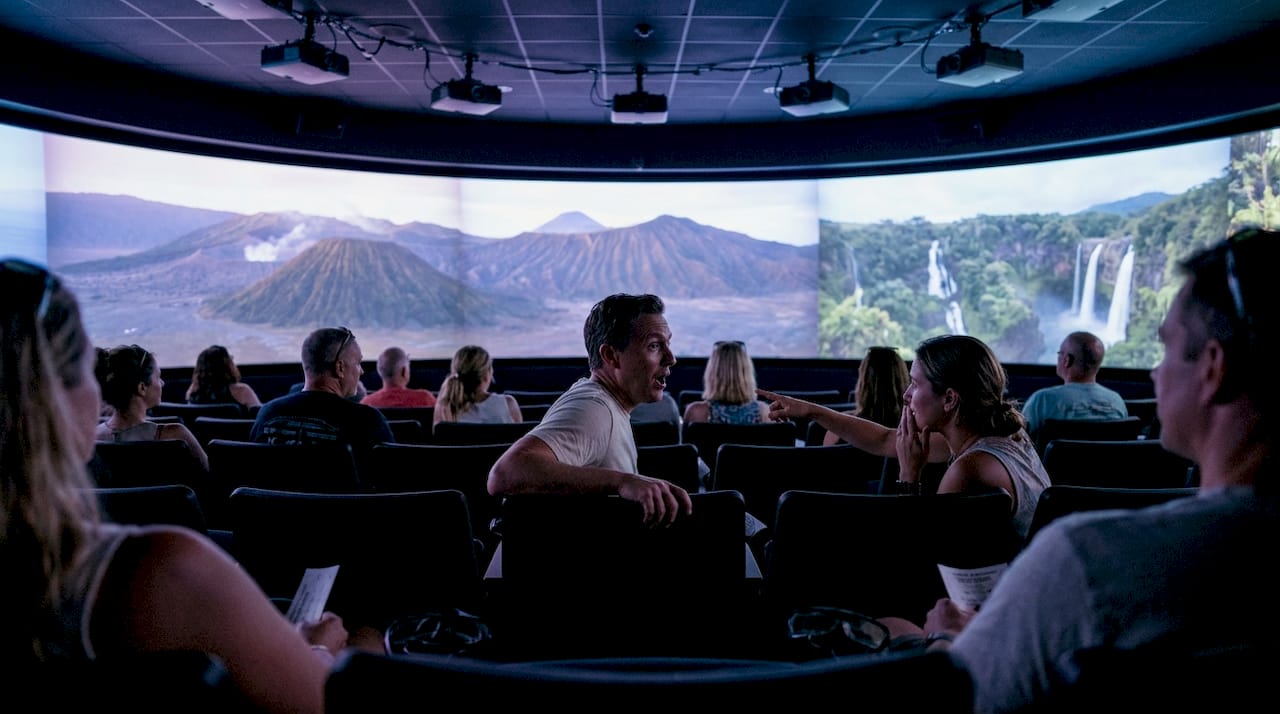
Most people picture Hawaii as beaches, sunsets, and snorkeling. Beautiful? Absolutely. But that picture barely scratches the surface of what a trip to Hawai’i can offer in 2026. 🌺 A new wave of visual effects (VFX) attractions is reshaping how tourists connect with Hawaiian culture, legends, and landscapes. These aren’t just flashy tech gimmicks. They’re powerful, story-driven experiences that blend 8K visuals, motion, scent, and sound into something you simply can’t get from a beach chair. Whether you’re a first-time visitor or a returning traveler, understanding how VFX works in Hawaii tourism will help you plan a trip that’s genuinely unforgettable.
Table of Contents
- What are visual effects in modern tourism?
- How visual effects are shaping Hawaii’s tourism
- Benefits of VFX-driven tourism for visitors and Hawaii
- What to look for in immersive Hawaiian attractions
- A new era: Why visual effects redefine authentic Hawaiian travel
- Ready for a new kind of Hawaiian adventure?
- Frequently asked questions
Key Takeaways
| Point | Details |
|---|---|
| Deeper cultural connection | Immersive visual effects experiences help visitors form stronger bonds with Hawaiian culture and stories. |
| Tech makes tourism sustainable | VFX attractions reduce overcrowding and lower the environmental impact on Hawaii’s natural and cultural sites. |
| Choose Indigenous-led experiences | Authenticity is highest when Indigenous Hawaiians lead or guide VFX attractions and storytelling. |
| Look for multisensory features | Top VFX attractions use visuals, sound, motion, and even scent to create immersive, memorable adventures. |
What are visual effects in modern tourism?
Visual effects in tourism go far beyond movie-style CGI. In the travel world, VFX refers to a broad family of immersive technologies designed to place you inside a story or landscape rather than just observe it from a distance.
Here are the core technologies you’ll encounter:
- XR (Extended Reality): An umbrella term covering all immersive tech, including VR and AR. XR blends physical and digital worlds in real time.
- VR (Virtual Reality): A fully digital environment experienced through a headset. You’re transported somewhere else entirely.
- AR (Augmented Reality): Digital layers added on top of the real world, often through a screen or smart glasses.
- Immersive theater: Physical spaces with motion seats, scent systems, wind effects, and ultra-high-resolution screens that surround you completely.
As immersive tourism technology continues to evolve, these tools are being used to create multisensory, culturally enriched experiences that go well beyond what a guidebook or scenic overlook can offer. Spatial audio, for example, places you inside a rainforest or a chant ceremony. Motion platforms tilt and sway so your body believes it’s flying over volcanic coastlines.
The best attractions layer multiple technologies together. A single experience might combine 8K projection, synchronized wind and scent, motion seating, and live narration rooted in Hawaiian legend. That combination is what makes VFX tourism feel real rather than artificial.
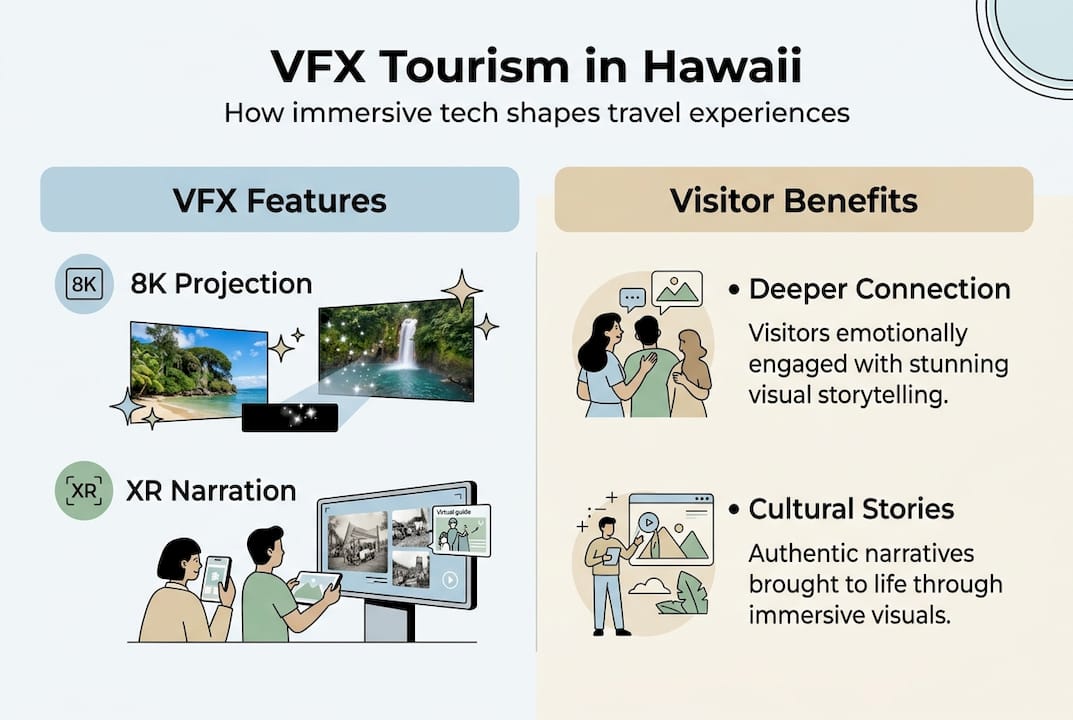
Pro Tip: Look for attractions that combine at least three sensory elements, such as visuals, motion, and scent. The more senses engaged, the more vivid and lasting the memory.
How visual effects are shaping Hawaii’s tourism
With the fundamentals clear, let’s see how these innovations come to life in real Hawaii attractions. 🌌
Flight of Aloha in Kailua-Kona is one of the most talked-about VFX experiences in the state. Think of it as what you’d get if a helicopter tour and a Disney ride had a baby, rooted in aloha. The attraction uses VFX ride films depicting Hawaiian legends with multi-sensory effects including wind, scent, and motion to simulate soaring over Hawai’i’s most breathtaking landscapes. Films like Naupaka and Lahaina bring ancient stories to life in ways that feel both thrilling and deeply respectful.
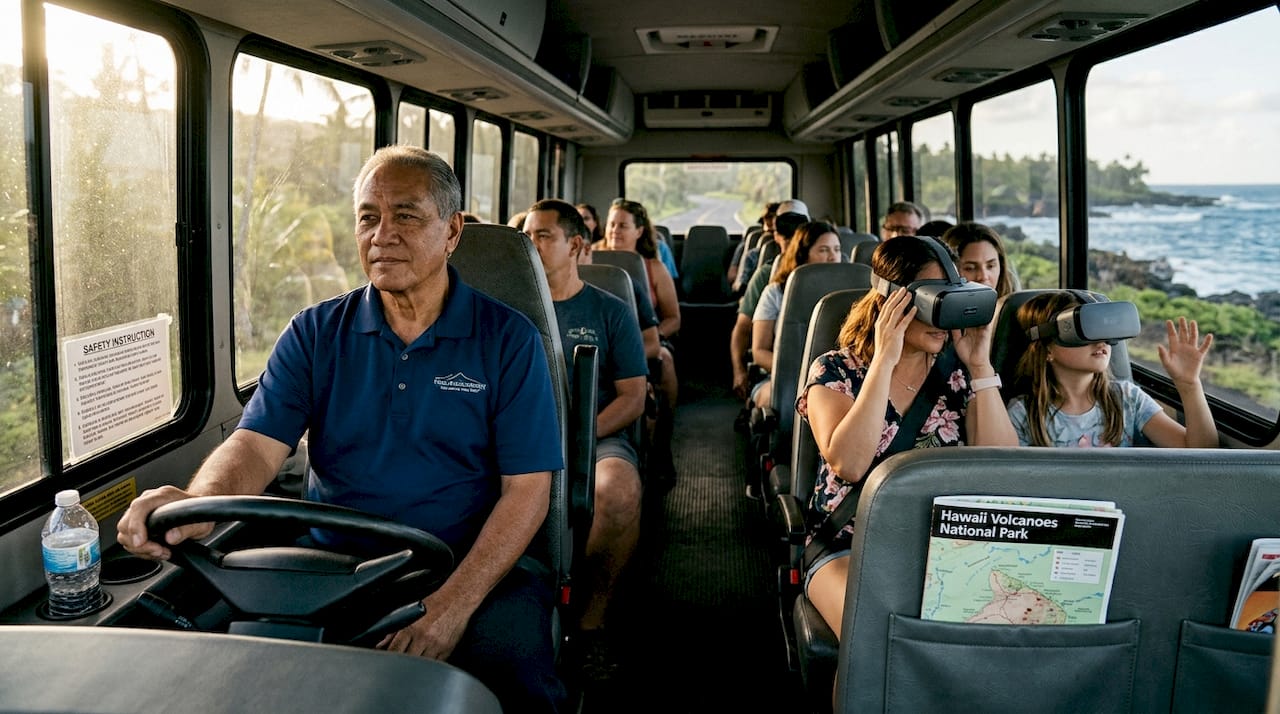
Another standout is the XploreRide Hawaii XR bus tour. This experience uses location-synchronized XR narrated by a Hawaiian guardian spirit to overlay digital storytelling onto real physical sites. As the bus passes sacred locations, mana stones, and historical landmarks, synchronized visuals and narratives transform what you see through the window.
Pearl Harbor also offers VR experiences that place visitors inside historical moments, while the Let Hawaii Happen VR tour helps travelers preview destinations before they even board a plane.
Here’s a quick comparison of top VFX attractions in Hawaii:
| Attraction | Type | Location | Unique Feature | Cultural Focus |
|---|---|---|---|---|
| Flight of Aloha | Immersive flying theater | Kailua-Kona | 8K visuals, motion, scent, wind | Hawaiian legends |
| XploreRide Hawaii | XR bus tour | Various sites | Location-synced XR, guardian narration | Mana stones, sacred sites |
| Pearl Harbor VR | Virtual reality | Honolulu | Historical immersion | WWII history |
| Let Hawaii Happen | VR preview tour | Online/pre-travel | Pre-trip destination preview | General Hawaiian culture |
Explore the best immersive tours in Hawaii to see how these experiences stack up for different travel styles. For families especially, Hawaiian storytelling highlights offer rich context that makes every legend feel personal.
Benefits of VFX-driven tourism for visitors and Hawaii
After seeing what’s possible with VFX, let’s dig into why these innovations matter both for you and for Hawaii itself.
Here are the key benefits, ranked by impact:
- Deeper cultural learning. VFX attractions don’t just show you a place. They tell you its story. When you feel the wind from a waterfall or smell the ocean during a flying theater film, your brain connects emotion to information.
- Stronger memory retention. Multisensory engagement boosts retention by 25% compared to traditional tours. You remember what you feel, not just what you see.
- Reduced ecological impact. XR reduces overcrowding and carbon footprint at fragile natural sites. Instead of hundreds of tourists trampling a sacred trail, VFX brings the trail to them.
- Cultural preservation. Controlled, story-driven narratives protect legends and traditions from being distorted or oversimplified.
- Accessibility. People with mobility limitations or health conditions can experience Hawaii’s most remote landscapes through immersive tech.
“85% of visitors report a deeper cultural connection after a VFX experience than after traditional tours.” That’s not a small margin. That’s a fundamentally different kind of travel.
There’s an important nuance here, though. Not all VFX experiences are created equal. The value of cultural entertainment depends heavily on who’s telling the story. Attractions led by Indigenous Hawaiians or built in close partnership with Native communities carry a very different weight than tech-forward experiences with no cultural grounding. The former deepens understanding. The latter risks turning sacred traditions into spectacle.
Prioritize local, story-driven VFX experiences. Ask who created the content and whether Native Hawaiian voices shaped the narrative.
What to look for in immersive Hawaiian attractions
Knowing the benefits, here’s how to choose the Hawaii attractions that will truly enrich your trip.
Not every VFX experience delivers the same quality or cultural depth. Here’s a practical checklist to guide your choices:
- Indigenous or Native Hawaiian involvement: Was the content created with or by Native Hawaiians? This is the single most important factor.
- Multisensory design: Does the experience engage more than just your eyes? Look for motion, scent, wind, and spatial audio.
- Narrative depth: Is there a real story being told, rooted in Hawaiian legend or history? Or is it just a scenic flyover?
- Interactive elements: Can you engage with the experience, ask questions, or explore at your own pace?
- Community benefit: Does the attraction support local Hawaiian families, cultural organizations, or preservation efforts?
Here’s a side-by-side comparison to help you evaluate your options:
| Feature | High-quality VFX attraction | Generic tech experience |
|---|---|---|
| Cultural leadership | Indigenous-led or co-created | No Native involvement |
| Sensory engagement | 3 or more senses | Visuals only |
| Story depth | Rooted in Hawaiian legend | Generic scenic content |
| Interactive features | Yes, audience participation | Passive viewing |
| Community impact | Supports local culture | No local benefit |
Use this guide to cultural storytelling to understand what makes a narrative truly authentic. And if you’re weighing entertainment options, this look at cultural education in Hawaii attractions offers helpful perspective on how the best venues balance fun and learning.
Pro Tip: Before booking, check whether the attraction features Native Hawaiian storytellers or cultural advisors. That detail alone tells you a lot about the experience’s authenticity.
A new era: Why visual effects redefine authentic Hawaiian travel
As you consider your options, it’s worth rethinking what “real” Hawaiian travel can mean today.
For years, the gold standard of authentic travel meant physical presence at a sacred site or natural wonder. Stand at the edge of a volcano. Walk a historic trail. That model made sense when technology couldn’t offer anything better. But it also meant fragile places absorbed millions of footsteps every year.
VFX changes that equation. When XR reduces overcrowding and carbon footprint while preserving culture through controlled, respectful narratives, it stops being a substitute for real experience and starts being a better one in many cases. You’re not watching a documentary. You’re inside the story.
What most tourists overlook is that technology isn’t the threat to Hawaiian authenticity. Poorly led, commercially driven experiences are. When Indigenous voices lead the storytelling, VFX becomes a tool for cultural revival, not erosion. It allows legends to be shared with millions of visitors without a single sacred stone being disturbed.
Learn more about cultural entertainment’s impact to see how this shift is already playing out across the islands. The travelers who get the most from Hawaii in 2026 aren’t just the ones who go to the most places. They’re the ones who choose experiences that go deeper.
Ready for a new kind of Hawaiian adventure?
You’ve seen how VFX is transforming Hawaii tourism, from deeper cultural connections to more sustainable, story-rich experiences. Now it’s time to put that knowledge to work on your actual trip. 🌺

Flight of Aloha in Kailua-Kona is one of the most exciting places to start. Imagine soaring over lush Hawaiian landscapes, feeling the ocean breeze, and experiencing ancient legends come alive around you, all without leaving your seat. It’s the kind of experience that stays with you long after you’ve flown home. Visit Flight of Aloha attractions to explore show times, packages, and everything this one-of-a-kind immersive theater has to offer. Your most meaningful Hawaiian adventure is closer than you think.
Frequently asked questions
How do visual effects attractions differ from traditional Hawaiian tours?
Visual effects attractions use XR, VR, and immersive technology to create multisensory narratives, while traditional tours focus on physical sites alone. The result is a richer, more emotionally engaging experience of Hawaiian culture and landscape.
Are these immersive experiences suitable for families and kids?
Yes, Hawaii’s VFX attractions often feature family-friendly themes, legends, and interactive elements appropriate for all ages. Flight of Aloha’s ride films like Naupaka are designed to educate and delight visitors of every generation.
Can VFX-based attractions really teach about Hawaiian culture?
Absolutely. Multisensory VFX increases memory retention by up to 25% compared to traditional tours, meaning visitors leave with a stronger, more lasting understanding of Hawaiian history and legend.
Is there a risk of these technologies making culture less authentic?
There can be, but it depends on who leads the experience. Tech amplifies authenticity best when Native Hawaiians shape the narrative, ensuring culture is honored rather than commodified.