
How customer engagement shapes unforgettable tourism experiences
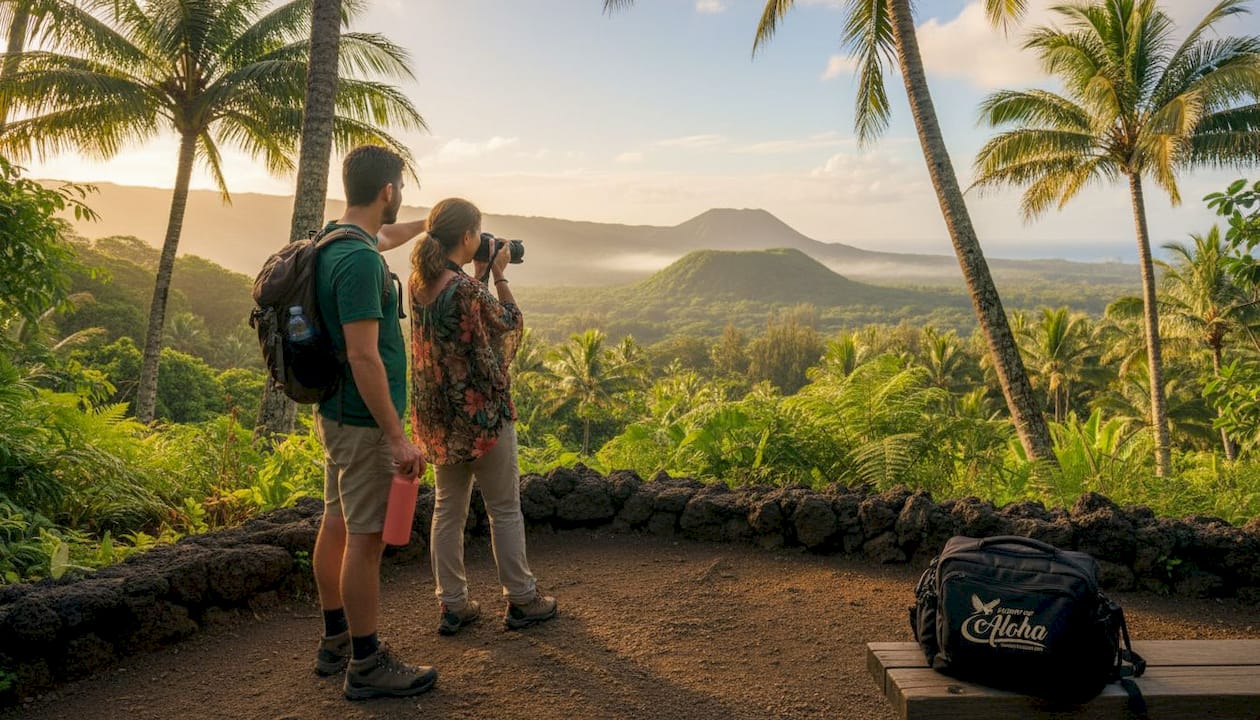
Most travelers arrive in Hawai’i with a checklist: snap a photo at the waterfall, watch a lū’au, maybe catch a sunset. But here’s what the brochures won’t tell you. The trips people remember for decades aren’t built on sights. They’re built on moments of genuine connection. Whether it’s learning the story behind a chant from a kupuna (elder), joining a hands-on lei-making workshop, or soaring over the islands in a way that makes your heart race, it’s active participation that turns a vacation into something deeply personal. This guide breaks down exactly what customer engagement means in tourism and shows you how to seek out the kinds of immersive Hawaii adventures that stay with you long after you land back home.
Key Takeaways
| Point | Details |
|---|---|
| Engagement is multi-dimensional | Meaningful travel is shaped by your cognitive, emotional, and behavioral involvement with each step of your Hawaii journey. |
| Immersive moments matter | Small, interactive local experiences often create stronger memories than major attractions. |
| Technology is a tool, not a substitute | Digital and immersive experiences should enhance, not replace, real-world cultural connections. |
| Responsible travel starts with values | Participating in initiatives like the Pono Pledge transforms tourism into a partnership with local communities and nature. |
| Metrics should fit the context | Tourism organizations should measure engagement in ways that match their unique roles, boosting satisfaction for both visitors and locals. |
Understanding customer engagement in tourism
Before we jump into the how, let’s clarify the what. “Customer engagement” is a phrase that gets tossed around in marketing a lot, but in travel it has a very specific and exciting meaning.
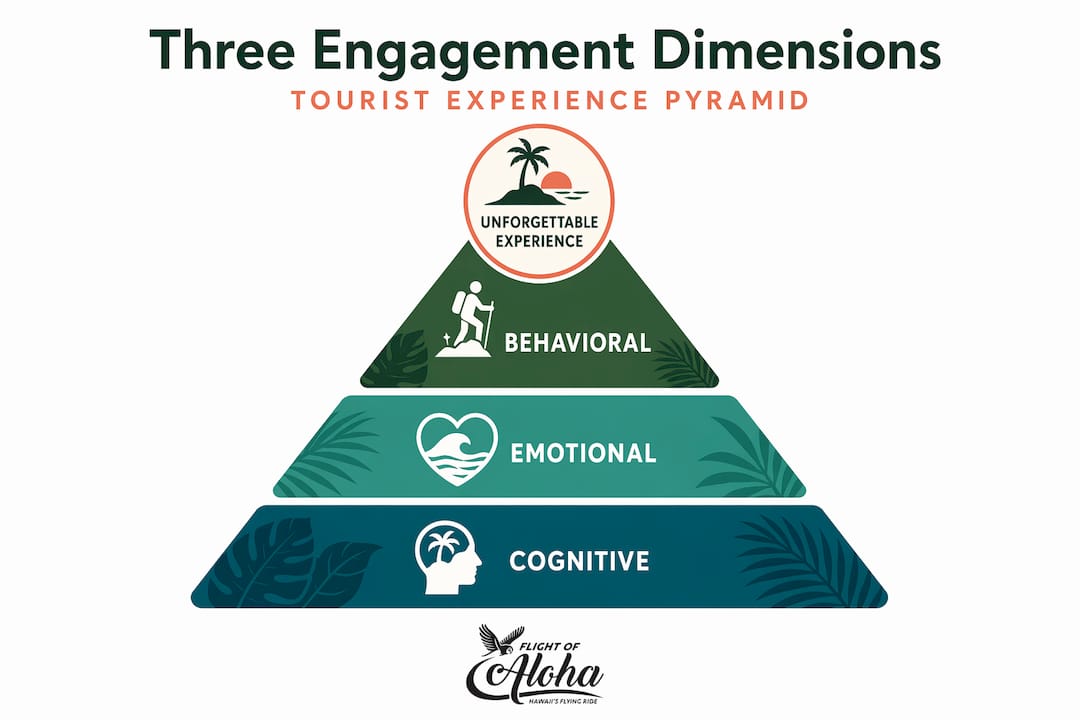
Customer engagement in tourism is typically understood through three dimensions: cognitive (what you think and learn), emotional (what you feel), and behavioral (what you actually do). These three layers work together across your entire travel journey, from the moment you start dreaming about a trip to the stories you share back home.
Here’s a simple breakdown:
| Dimension | What it looks like in Hawaii |
|---|---|
| Cognitive | Learning the legend behind Naupaka flowers from a local guide |
| Emotional | Feeling a rush of wonder while soaring over a lava field |
| Behavioral | Signing the Pono Pledge, joining a beach cleanup, sharing your story |
Engaged visitors behave differently than passive tourists. They ask questions. They seek context. They contribute, not just consume. And the research is clear: engaged travelers report higher satisfaction, stronger memories, and a much greater desire to return or recommend a destination to others.
“In tourism, customer engagement is typically operationalized through tourists’ cognitive, emotional, and behavioral involvement with a destination or provider across the travel journey.” 🌺
When you think about enhancing immersion at every stage of your trip, you shift from being a spectator to becoming part of the story. That shift is everything.
The stages where engagement happens matter too:
- Before your visit: Inspiration, research, building anticipation
- During your visit: Hands-on activities, cultural exchanges, immersive experiences
- After your visit: Sharing memories, reviews, advocacy, and lifelong connection to a place
Understanding this roadmap helps you plan with intention so you walk away with more than just photos.
How engagement transforms travel experiences
Now that you know what engagement is, let’s explore how it plays out on the ground and why it’s the key to unforgettable Hawaii moments.
Picture two travelers visiting the same volcano national park. The first reads a plaque and moves on. The second stops, asks their ranger guide what Pele means to local families, and learns that lava flows are seen as creation, not destruction. Who leaves with a richer story? That second traveler is engaged. They’ve activated all three dimensions.
Deeper travel experiences consistently come down to these key engagement touchpoints:
- Hands-on cultural workshops like kapa cloth making, poi pounding, or traditional fishing methods
- Local storytelling sessions where legends come alive through chant, hula, and oral tradition
- Interactive guided tours led by people who are part of the community they’re sharing with you
- Immersive theater and sensory experiences that blend technology with authentic Hawaiian narratives
- Conservation activities like coral reef monitoring or native plant restoration
A 2025 study on deepening engagement found that digital and technology-enabled experiences, including immersive attractions, are positioned in the research literature as a powerful way to deepen involvement and improve psychological outcomes for travelers. The critical nuance? Technology amplifies emotional connection but should never replace it.
Think about the difference between watching a video about Hawaiian culture and actually being inside a flying theater where you can smell plumeria blossoms, feel the ocean breeze, and hear chants as you soar over sacred valleys. Both use technology. Only one feels like the real thing because it’s rooted in authentic cultural storytelling. That’s the difference between a screen and an experience.
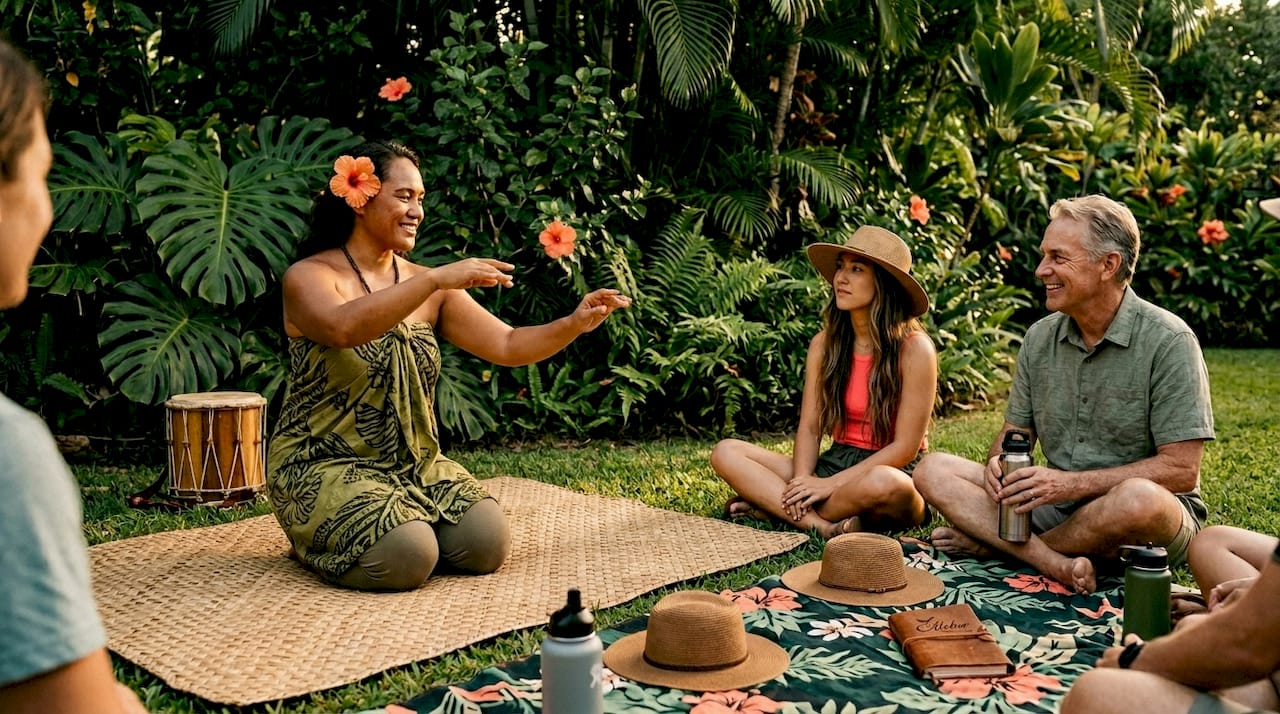
Even visiting an immersive media art exhibition in another destination helps illustrate this point. Immersive formats can be powerful. But in Hawaii, the most moving ones are those where the content comes from within the culture, told with genuine respect and deep knowledge.
For even richer Hawaiian immersion impact, look for guides and experience providers who are themselves Native Hawaiian or who partner closely with local communities.
Here’s a quick comparison of what engaged vs. disengaged travel looks like:
| Experience type | Passive tourist | Engaged traveler |
|---|---|---|
| Cultural tour | Takes photos, moves on | Asks questions, learns a word in ‘ōlelo Hawai’i |
| Lū’au | Watches the show | Joins in, talks to performers |
| Scenic lookout | Checks it off the list | Learns the mo’olelo (story) behind the view |
| Immersive attraction | Sits back and watches | Connects the experience to the culture |
Pro Tip: When booking activities, look specifically for operators who invite you to participate rather than just observe. Ask: “Will I get to interact with local guides or contribute to something meaningful?” That question alone separates the remarkable from the routine.
Key touchpoints: Where engagement happens across your journey
Understanding what makes tourism experiences deeply connecting, let’s outline when and where you as a visitor can actively engage along your entire Hawaii adventure. 🌌
A touchpoint in tourism is simply any moment when you interact with a destination, its people, or its stories. Every touchpoint is a chance for engagement. Here’s how to maximize each one:
-
Inspiration (pre-visit): Follow authentic Hawaiian voices, podcasts, and cultural educators online before you arrive. Watch films or read books by Native Hawaiian authors. Arrive curious, not just excited.
-
Planning: Choose experiences based on cultural depth, not just thrill level. Research which operators are community-supported. Look for interactive tourism opportunities that promise two-way exchange.
-
On-site immersion: This is your richest engagement window. Attend cultural demonstrations. Ask for the story behind what you’re seeing. Visit richer immersive attractions that blend storytelling with sensation.
-
Sharing and advocacy (post-visit): Share your experiences thoughtfully. Credit the communities and guides who enriched your visit. Leave reviews that highlight what made an experience culturally meaningful. Consider supporting causes tied to Hawaiian land and cultural preservation.
A framework for Customer Journey Management in tourism integrates cognitive, emotional, and behavioral dimensions across pre-, during-, and post-consumption stages and proposes a measurement tool tied to touchpoints and outcomes like satisfaction and delight. In plain terms: when you engage at every stage, not just during the trip, you get more out of the whole experience.
“The most memorable journeys are not built at a single destination. They’re woven together across every touchpoint, from the moment you dream to the moment you share.” 🌺
Pro Tip: Ask your guide directly, “How can I support what you’re doing here?” That simple question opens doors. Guides will often share conservation projects, language preservation efforts, or community programs you can contribute to even after you leave.
Hawaii’s leading edge: Responsible and values-based engagement
As engagement touches every stage of travel, Hawaii demonstrates that the way we engage can protect and enrich both land and community for years to come.
Hawaii isn’t just a beautiful place to visit. It’s a living culture with roots stretching back more than a thousand years. That’s why the most forward-thinking engagement models here go beyond “follow the rules” and ask visitors to genuinely internalize local values.
The Pono Pledge is a powerful example. Pono is a Hawaiian concept of righteousness, balance, and respect. The pledge asks visitors to commit to traveling in a way that honors that value, treating the land, the ocean, and the people with genuine care. It converts responsible tourism from a checklist into a shared values-driven experience.
Here’s why values-based engagement matters for you as a visitor:
- Authenticity: When you travel with respect, locals open up. You access stories and places that aren’t on any tourist map.
- Deeper understanding: Learning why something is sacred, not just that it is, transforms your entire perspective.
- Positive impact: Your visit actively contributes to the preservation of what makes Hawaii so extraordinary.
- Stronger memories: Trips rooted in meaning are the ones you still talk about ten years later.
The Pono Pledge has gained traction through promotion via visitor centers, hotels, and community partners across the islands. It’s not a government mandate. It’s a voluntary commitment that invites you into a relationship with Hawai’i rather than just a transaction.
“Shared stewardship is what turns a visitor into a guest and a guest into a friend of the land.” 🌺
Discovering Kailua-Kona immersive experiences that are built on these same values is one of the most exciting parts of planning your Big Island adventure. Look for experiences where Hawaiian culture is not a backdrop but the heartbeat of everything.
The nuances of measuring and managing engagement
Responsible engagement is only as effective as the strategies that guide it. Let’s dig into how tourism organizations and you as a traveler can maximize meaningful interactions.
Not all engagement is created equal, and this is actually really important for visitors to understand. Different parts of Hawaii’s tourism ecosystem play different roles in shaping your experience.
Here’s a quick breakdown:
- Destination Marketing Organizations (DMOs): These inspire and attract visitors. Their job is to spark curiosity and set expectations. They’re not usually the ones delivering your experience on the ground.
- Hotels and resorts: These manage comfort, hospitality touchpoints, and loyalty. Their engagement is about making you feel welcome, cared for, and valued.
- Experience providers (like immersive attractions and cultural operators): These are the ones who actually shape your memories. Their engagement is direct, sensory, and deeply personal.
A travel CRM analysis confirms that benchmarks and diagnostics for engagement should be tailored to the organization’s role in the journey. DMOs, attractions, and hotels each steward different relationship objectives, meaning their success metrics need to align with what they actually control and influence.
Here’s why this matters for you: When a DMO focuses purely on conversion metrics (did you buy something?), it can actually work against deeper engagement. The better approach for destination-level marketing is to prioritize inspiration, content quality, and cultural storytelling. That builds the kind of anticipation and respect that makes visitors show up ready to engage meaningfully.
“Measuring engagement for a DMO with hotel conversion KPIs can produce strategies that are technically correct but operationally strained.”
As a traveler, you benefit when every part of the ecosystem is playing its right role. When the DMO has inspired you well, the hotel welcomed you warmly, and the entertainment tourism provider has delivered a deeply immersive experience, that’s when your trip truly sings.
Our take: What most visitors miss about engagement in Hawaii
With all the details on engagement clear, it’s time for a candid look at what most guides and websites won’t tell you.
Here’s the honest truth: many travelers think “engagement” means signing up for a lot of activities. Fill the itinerary, check the boxes, post the content. But that’s busyness, not engagement. Real engagement is a mindset.
It’s showing up to a cultural site with curiosity instead of a camera in your face. It’s listening to a story all the way through, even if it runs longer than expected. It’s being genuinely interested in the person behind the experience, not just the experience itself.
Some of the best moments we hear about from visitors don’t come from any planned activity. They happen spontaneously. A fisherman shares a family story at the pier. A shop owner explains what a piece of art actually represents. A guide goes off-script because a guest asked a real question. Those moments can’t be scheduled. They arise when you bring openness and respect to every interaction.
Discover immersive Hawaii in the fullest sense and you’ll find that the most transformative experiences are the ones where your presence actually matters to the people sharing them with you. You’re not an audience member. You’re a participant.
True engagement also leaves a positive footprint. When you engage with integrity, you enrich your own memories and the place you’ve visited. That’s the kind of travel that’s good for everyone. And it starts with understanding that visitor workflow in immersive attractions is designed to invite you in, not just move you through.
Bring your Hawaii journey to life
Ready to turn these insights into your own transformative Hawaii story? Here’s how you can start right now.
If you’re craving an experience that hits all three dimensions of engagement (cognitive, emotional, and behavioral) in one powerful moment, Flight Of Aloha is where to begin. We’re a flying theater attraction in Kailua-Kona that blends 8K visuals, motion, scents, and wind with genuine Hawaiian cultural storytelling rooted in legend and aloha. Think of us as what you’d get if a helicopter tour and a Disney ride had a baby, then raised it on the spirit of Hawai’i. 🌺
Beyond the experience itself, our blog is full of resources to help you engage more deeply with everything the islands have to offer. Start by exploring immersive technology in tourism and discover how the future of travel is rooted in the stories of the past. Your most unforgettable Hawaii adventure is waiting.
Frequently asked questions
What are some examples of customer engagement touchpoints in Hawaii tourism?
Common touchpoints include local workshops, guided cultural tours, interactive storytelling sessions, and post-visit sharing or advocacy. A proposed tourism framework confirms these span the full pre-, during-, and post-visit journey and connect directly to satisfaction and delight.
Does using technology always make engagement better for tourists?
Technology can deepen involvement but works best when it supports emotional and cultural connection, not when it replaces them. The strongest insights in the tourism engagement literature suggest that technology should serve cultural and experiential design goals, not overshadow them.
How can tourists participate in responsible tourism in Hawaii?
Travelers can commit to local values like those in the Pono Pledge, support stewardship efforts, and actively learn about Hawaiian culture. The Pono Pledge initiative aligns DMOs, nonprofits, businesses, and local authorities under the shared values of balance, righteousness, and respect.
Why shouldn’t all parts of tourism measure engagement with the same metrics?
Different tourism actors like DMOs or hotels influence different parts of the customer journey, so their success should be measured accordingly. A travel CRM analysis shows that misaligning KPIs with organizational roles creates strategies that miss what actually matters to travelers.