
How to combine cultural experiences in Hawaii 🌺
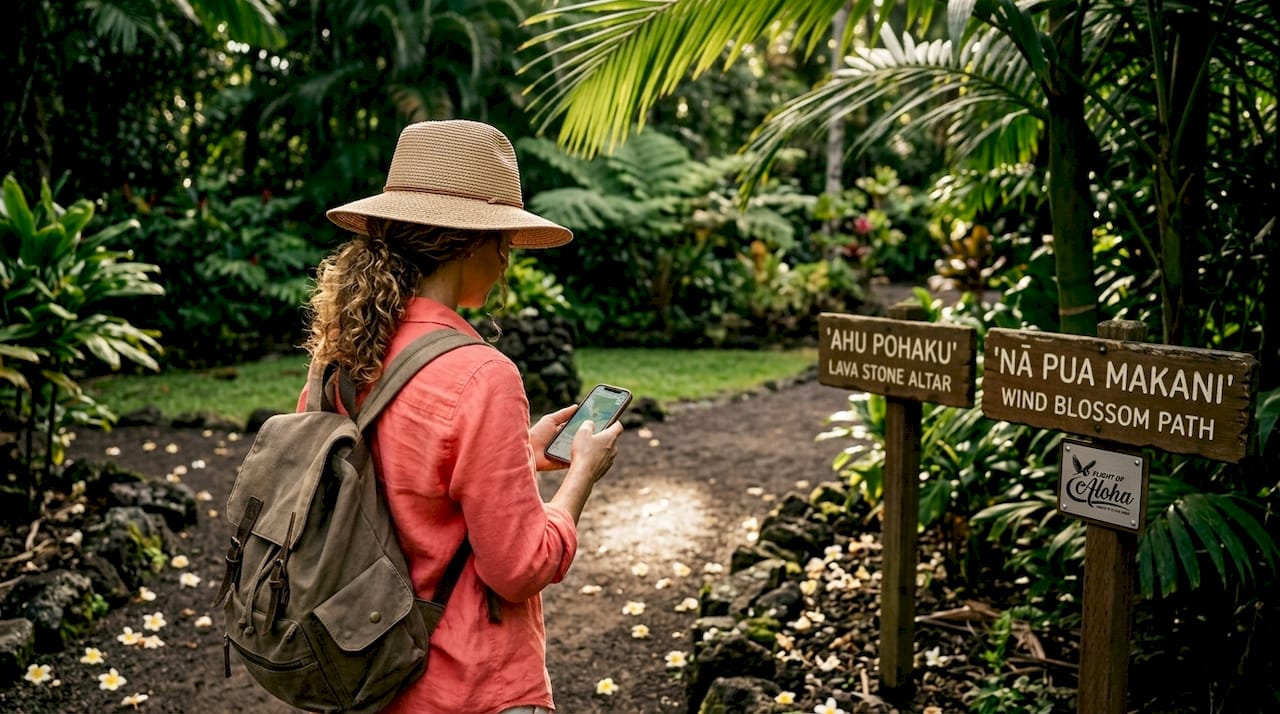
Many visitors leave Hawaii having photographed its beaches and tasted its food, yet they never truly connected with the islands. They were present, but not really there. Hawaii is one of the most culturally rich places on earth, and a trip that skips its living traditions, legends, and visual storytelling is only half a trip. This guide is built for travelers who want more than surface-level tourism. Whether you’re visiting the Big Island for the first time or returning for a deeper look, you’ll find practical, actionable steps here for blending cultural experiences into something truly unforgettable.
Key Takeaways
| Point | Details |
|---|---|
| Blended experiences deepen memories | Combining various Hawaiian cultural activities creates a more meaningful and lasting travel experience. |
| Preparation enhances authenticity | Learning about traditions and setting intentions leads to a more genuine connection with local communities. |
| Balance activities | Mixing indoor and outdoor events helps visitors appreciate both Hawaii’s stories and its landscapes. |
| Avoid common mistakes | Careful planning and research help you skip tourist traps and embrace real cultural immersion. |
Understanding what makes a cultural experience
Not every activity with a “cultural” label actually delivers one. In Hawaii, a genuine cultural experience connects you to the people, the land, and the stories that have shaped these islands for centuries. Think music, hula, food traditions, oral storytelling, visual art, ancient rituals, and sacred natural sites. Those are the real building blocks.
Cultural entertainment shapes visitor experiences in ways that standard sightseeing simply cannot. A harbor cruise gives you a view. A hula performance led by a Hawaiian cultural practitioner gives you a window into a language that existed before written words. The difference is significant.
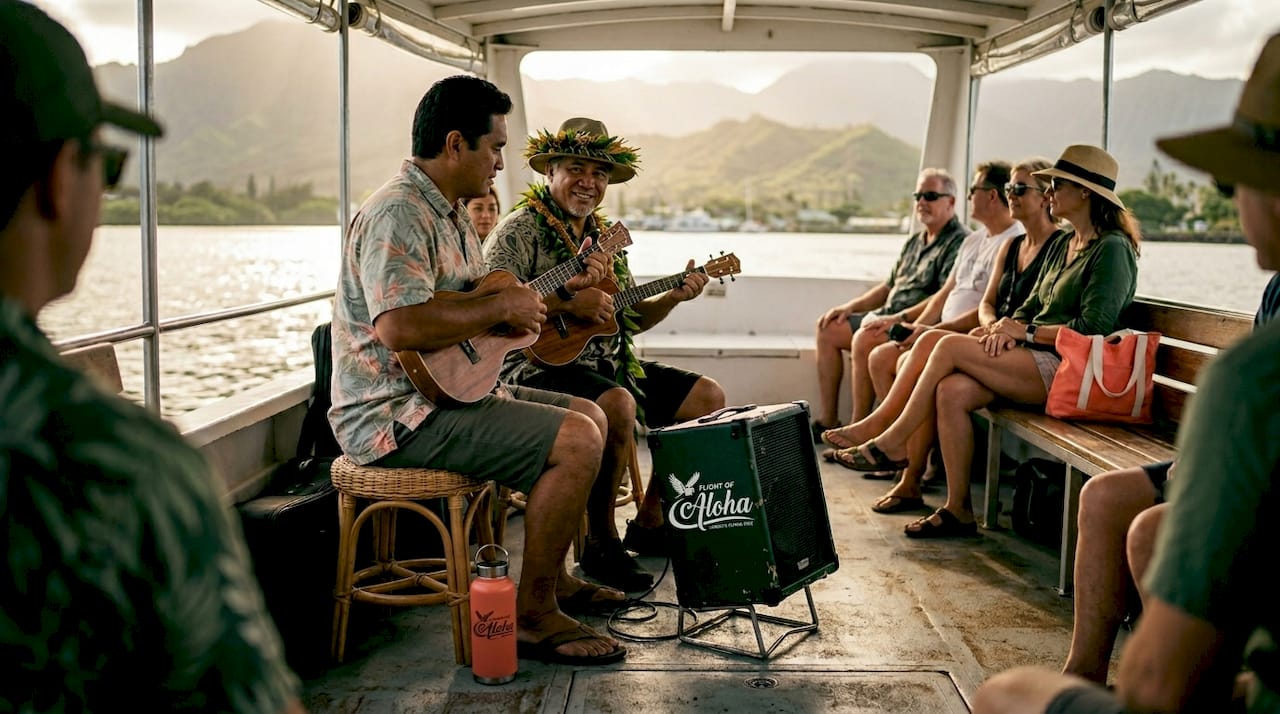
What counts as a cultural experience in Hawaii?
Here’s a quick breakdown of the categories worth seeking out:
- Performing arts: Traditional hula, slack-key guitar, chant (oli)
- Culinary traditions: Poi pounding, imu (underground oven) cooking demonstrations, farm-to-table experiences rooted in Hawaiian land use
- Visual storytelling: Murals, petroglyphs (ancient rock carvings), immersive theaters, cultural films
- Natural and sacred sites: Heiau (Hawaiian temples), lava fields, ancient fishponds
- Craft and art: Kapa cloth making, lauhala weaving (woven pandanus leaf work), lei crafting
The real magic happens when you combine these categories. Why cultural experiences matter is a question with a rich answer: they shift you from passive observer to engaged participant, and that changes how you remember your entire trip.
Typical vs. immersive tourism
| Typical tourism | Immersive cultural tourism |
|---|---|
| Pre-packaged resort activities | Locally guided, community-centered events |
| Passive observation | Active participation and storytelling |
| Surface-level history overview | Deep dives into legends and living traditions |
| Generic souvenir shopping | Handmade crafts from Hawaiian artisans |
| Indoor-only or outdoor-only focus | Blended indoor and outdoor experiences |
Visual storytelling plays a particularly powerful role in Hawaii’s attractions. When stories are told through 8K visuals, motion, scent, and wind, they bypass intellectual processing and go straight to emotional memory. You don’t just learn about Hawai’i. You feel it.
Preparing for your immersive cultural journey
With a better understanding of what to look for, it’s time to prepare for your journey. Preparation isn’t just about packing the right gear. It’s about arriving with the right mindset.
Destination entertainment in Hawaii draws from a wide spectrum of cultural influences, offering immersive opportunities that reward curious, open-minded visitors. The travelers who get the most out of these experiences are the ones who show up ready to be moved.
What to bring
Pack these essentials for cultural exploration:
- A small notebook: Jot down names, words, and stories you hear. You’ll want to revisit them.
- A quality camera: Capture art, landscapes, and performances, but always ask before photographing people or sacred spaces.
- Comfortable, respectful attire: Loose, modest clothing works well for cultural sites and performances.
- A local guide app or offline map: Apps like Hawaii Trails (managed by the DLNR) help you navigate heritage sites safely.
- An open heart: Seriously. This one matters most.
Setting intentions vs. passive sightseeing
There’s a big difference between a standard itinerary and a blended cultural plan. Here’s how they compare:
| Standard itinerary | Blended cultural plan |
|---|---|
| Book the most popular tours | Research events led by local cultural practitioners |
| Move from spot to spot quickly | Spend meaningful time at fewer, deeper experiences |
| Focus on photo opportunities | Focus on understanding and participation |
| Follow the tourist trail | Ask locals for their recommended hidden cultural gems |
| End the day with dinner and sleep | Reflect on what you learned and felt |
Choosing cultural entertainment that aligns with your interests makes it far easier to stay engaged rather than rushing through a checklist. Think of it like building a playlist: you want the pieces to flow together and build on each other.
Pro Tip: Learn five to ten basic Hawaiian words before you arrive. “Mahalo” (thank you), “aloha” (love, peace, hello), and “ohana” (family) are a great starting point. Locals notice and appreciate the effort, and it opens doors to warmer, more authentic conversations.
Step-by-step: How to combine cultural experiences
Once you’re prepared, you can confidently begin planning your immersive itinerary. Here’s how.
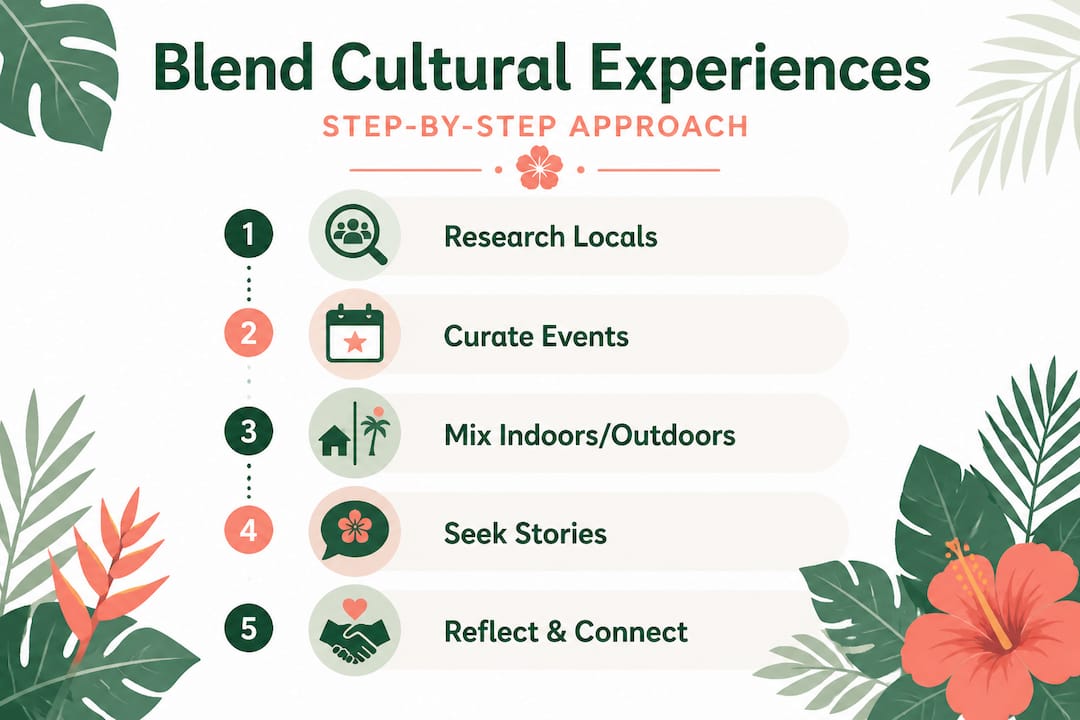
Themed cultural experiences create a richer, more memorable visit when they are woven together thoughtfully rather than experienced in isolation. The goal is a journey that builds meaning over time.
The five-step process
-
Research authentic events first. Start at least two weeks before your trip. Look for events connected to cultural organizations, community festivals, and local performers. The Hawaii Tourism Authority and local visitor bureaus publish community event calendars.
-
Select experiences that blend visual and natural elements. A great cultural day might start with an immersive attraction that uses visual storytelling, then move to a hike near a heiau or along a lava coast. The indoor story becomes the lens through which you see the outdoor landscape.
-
Plan your sequence intentionally. Start with context-building experiences (storytelling, film, or museum) and move toward more physical or participatory ones (hikes, craft workshops, performances). This order builds emotional investment.
-
Alternate indoor and outdoor activities. Hawaii’s weather and natural beauty are gifts, but so are its cultural spaces. A morning at an immersive theater followed by an afternoon at Kaloko-Honokohau National Historical Park creates a conversation between the two that neither experience could achieve alone.
-
Connect with local guides. A guide who grew up in Kona or on Maui will share stories that no travel blog ever will. Look for guides affiliated with cultural nonprofits or recognized by community organizations.
Step-by-step planning table
| Step | Action | Why it matters |
|---|---|---|
| 1. Research | Find authentic, locally led events | Ensures genuine cultural content |
| 2. Select | Choose experiences with visual and natural layers | Adds depth and emotional impact |
| 3. Sequence | Build context before participation | Creates a learning arc |
| 4. Alternate | Mix indoor storytelling with outdoor discovery | Engages all senses |
| 5. Connect | Book local guides where possible | Unlocks stories beyond the guidebook |
Cultural storytelling is the thread that ties all of these steps together. When every experience you choose has a story at its center, your itinerary stops being a list of stops and starts being a narrative you’re living.
Pro Tip: Blend indoor arts (immersive theaters, performances, museums) with outdoor adventures like heritage hikes and fishpond visits. This combination activates different parts of your brain and keeps your experience fresh and emotionally resonant throughout the day.
Troubleshooting: Common mistakes and how to avoid them
Combining experiences is rewarding, but here’s how to avoid the most common mistakes visitors make.
Local entertainment rooted in authentic storytelling is what truly enhances the quality of any Hawaii visit. But not every experience labeled “Hawaiian” delivers on that promise. Knowing the difference protects your time and your energy.
Mistakes to watch for
- Assuming all “cultural” events are created equal. Some performances are polished for mass tourism and lack community roots. Research the organizers before you book. Look for ties to Hawaiian cultural councils or community endorsements.
- Overloading your schedule. Trying to squeeze in six activities in one day is a recipe for burnout. Three deeply experienced events beat eight rushed ones every single time. Give yourself time to sit, reflect, and absorb.
- Ignoring local etiquette. At heiau and other sacred sites, silence and respectful behavior are expected. Some areas prohibit photography entirely. Always read posted signage and follow guidance from your local guide.
- Missing the quieter, off-the-beaten-path gems. The most powerful cultural moments in Hawaii often happen away from the main resort strips. A small community hula halau (hula school) performance or a guided petroglyph walk can be more impactful than a large commercial luau.
- Treating participation as optional. When a cultural practitioner invites you to try something, whether it’s pounding poi or learning a basic hula gesture, say yes. Those moments of participation are where real connection happens.
Refer to a visitor cultural storytelling guide to stay oriented on what questions to ask and how to approach each new cultural space with respect.
“The difference between being a tourist and being a true cultural visitor comes down to attention. Thoughtful participation, not passive observation, is what transforms a vacation into something you carry home inside you.”
This mindset shift is the single most powerful tool you have. It costs nothing, requires no extra booking, and makes every experience you have richer by default.
A new perspective: Why deeper cultural blending transforms your Hawaii visit
Here’s something most travel guides won’t tell you: the magic of Hawaii isn’t found in any single experience. It lives in the space between them.
When you see an immersive film that tells the legend of Naupaka, a Hawaiian story of star-crossed lovers whose memory is preserved in the naupaka flower found on beaches and mountaintops across the islands, and then you actually find that flower on your hike the next morning, something shifts. The story becomes real. The island becomes a living narrative, not just a backdrop.
That’s what blending cultural experiences does. It creates those moments of recognition where everything clicks together. Hawaii isn’t just a place to visit. It’s a living story shaped by its people, its land, and thousands of years of tradition. Every petroglyph, every chant, every lava field is a chapter.
Most visitors overlook this because they approach their trip as a menu: pick the activities that look fun, check them off, go home. But cultural impact for visitors who engage more deeply is profound. Research from cultural tourism organizations consistently shows that travelers who blend storytelling with natural and participatory experiences report higher satisfaction, more meaningful memories, and a greater desire to return and go even deeper next time.
We genuinely believe that the travelers who blend experiences purposefully are the ones who come back. Not because they missed something, but because they felt something and want to feel it again.
Pro Tip: After each major cultural experience, take five minutes to write down one thing that surprised you and one thing that moved you. By the end of your trip, you’ll have a personal record of your evolving understanding of Hawaiian culture. It reveals layers you didn’t know you were absorbing.
Ready to design your immersive cultural adventure?
Inspired to go beyond sightseeing? Here’s how Flight of Aloha can help bring your plans to life.
Flight of Aloha in Kailua-Kona is the kind of experience that anchors an entire cultural itinerary. Imagine a flying theater that blends 8K visuals, motion, wind, and authentic Hawaiian scents to carry you over lush valleys, volcanic coastlines, and sacred landscapes, all rooted in real Hawaiian legends and traditions. It’s what you’d get if a helicopter tour and a Disney ride had a baby, rooted in aloha. 🌌

Use it as your opening experience to build cultural context before hitting the trails and cultural sites of the Big Island. Or save it for your last evening as a breathtaking way to reflect on everything you’ve seen and felt. Either way, it belongs in your blended cultural plan. Visit Flight of Aloha to explore ticket options, VIP experiences, and show schedules, and start building the immersive Hawaii adventure you’ve been dreaming of. 🌺
Frequently asked questions
What are examples of combined cultural experiences in Hawaii?
Activities like joining a traditional luau followed by a nature hike with a local guide merge performance, storytelling, and scenic beauty into a holistic cultural experience. Pairing an immersive theater show with a visit to a heiau or petroglyph field deepens the connection even further.
How can I tell if a Hawaiian cultural event is authentic?
Look for events led by local performers or storytellers, endorsed by cultural organizations, and staged in meaningful locations. Authentic visitor experiences in Hawaii are shaped by genuine community involvement, not just surface-level aesthetics.
Is it possible to blend indoor and outdoor activities for a richer experience?
Yes, pairing cultural performances or museum visits with outdoor adventures lets you connect with Hawaii’s stories and landscapes at the same time. Blending entertainment with scenery creates a more memorable and emotionally resonant visit overall.
What should I bring to fully enjoy cultural activities in Hawaii?
Bring comfortable clothing, a small notebook, water, and a willingness to participate respectfully. These simple essentials make you ready to engage fully rather than just observe from a distance.
Recommended
- Unique Family Experiences In Hawaii For Cultural Fun | Flight Of Aloha
- How To Combine Attractions For A Unique Hawaiian Adventure | Flight Of Aloha
- Why Cultural Experiences Matter For Hawaii Visitors | Flight Of Aloha
- How To Combine Flying Theater With Tours In Hawaii | Flight Of Aloha
- Where to Live in Hawaii: Complete Guide to Choosing the Right Island and Lifestyle