
Why immersive attractions in Hawaii create richer experiences 🌺
TL;DR:
- Immersive attractions fully engage senses to create realistic, emotionally resonant experiences of Hawaiian culture.
- They promote deeper understanding, stronger family bonding, and reduced stress through shared, multisensory storytelling.
- Customizing experiences based on interests and reflection enhances lasting meaning and enjoyment during Kona visits.
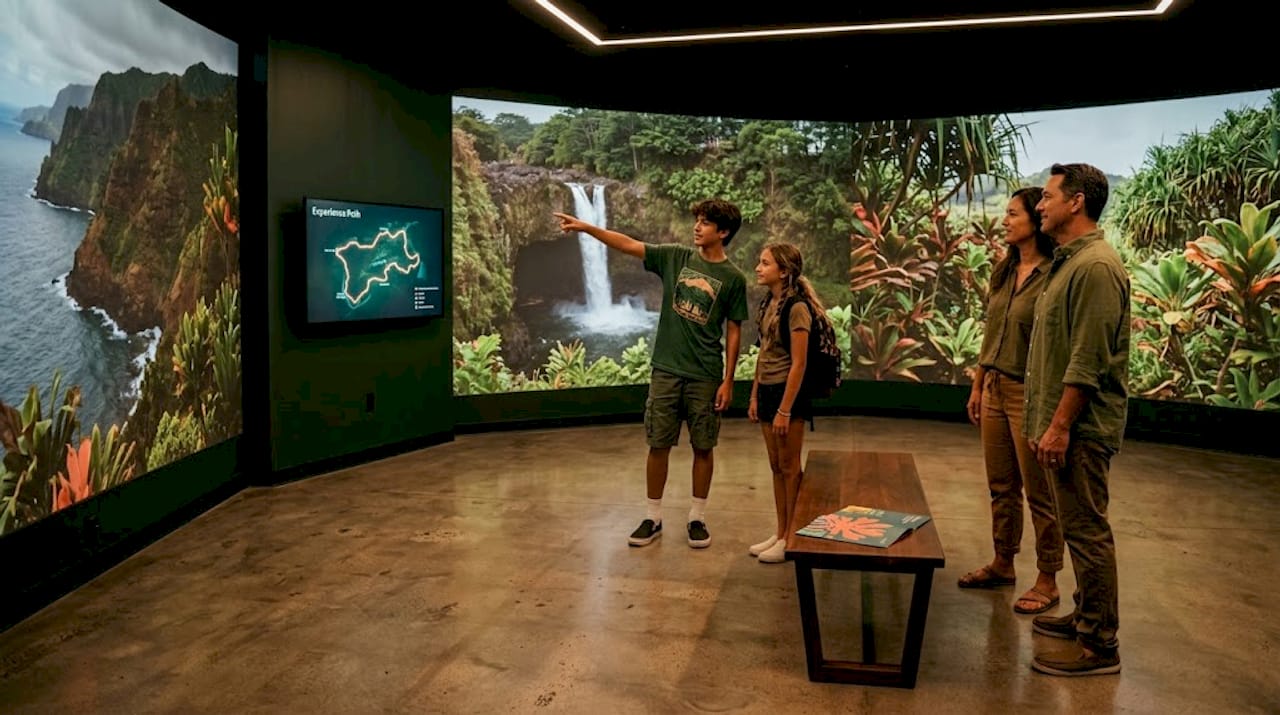
Most visitors to Hawaii pack their itineraries with beach days, luaus, and helicopter tours. All of those are wonderful. But there’s a newer category of experience quietly rewriting what it means to truly connect with this place. Immersive attractions bring Hawaiian legends, landscapes, and culture to life in ways that no postcard or standard tour can match. Whether you’re traveling with kids, extended family, or a curious group of friends, this guide unpacks exactly what immersive attractions offer, why they matter, and how to get the most out of them on your Kona trip.
Table of Contents
- What makes an attraction immersive?
- How immersive attractions deliver deeper cultural experiences
- The emotional benefits of immersive entertainment
- When is immersion most meaningful? Customizing your experience
- Our perspective: Meaning matters more than mechanics in immersive travel
- Experience Kailua-Kona’s immersive side today
- Frequently asked questions
Key Takeaways
| Point | Details |
|---|---|
| Immersion enhances culture | Immersive attractions make Hawaiian legends and traditions feel vivid and meaningful through engaging technology. |
| Strengthens family bonding | Experiencing immersive entertainment together deepens shared memories and group connection. |
| Reduces stress, boosts mood | Multisensory immersive experiences help lower stress and raise feelings of well-being for visitors. |
| Personalization increases value | Matching attractions to your group’s interests and goals makes immersion much more impactful. |
What makes an attraction immersive?
To understand why immersive attractions are worth your time, it helps to start with what sets them apart.
A standard attraction shows you something. An immersive attraction puts you inside something. That’s the essential difference, and it changes everything about how you feel and what you remember afterward.
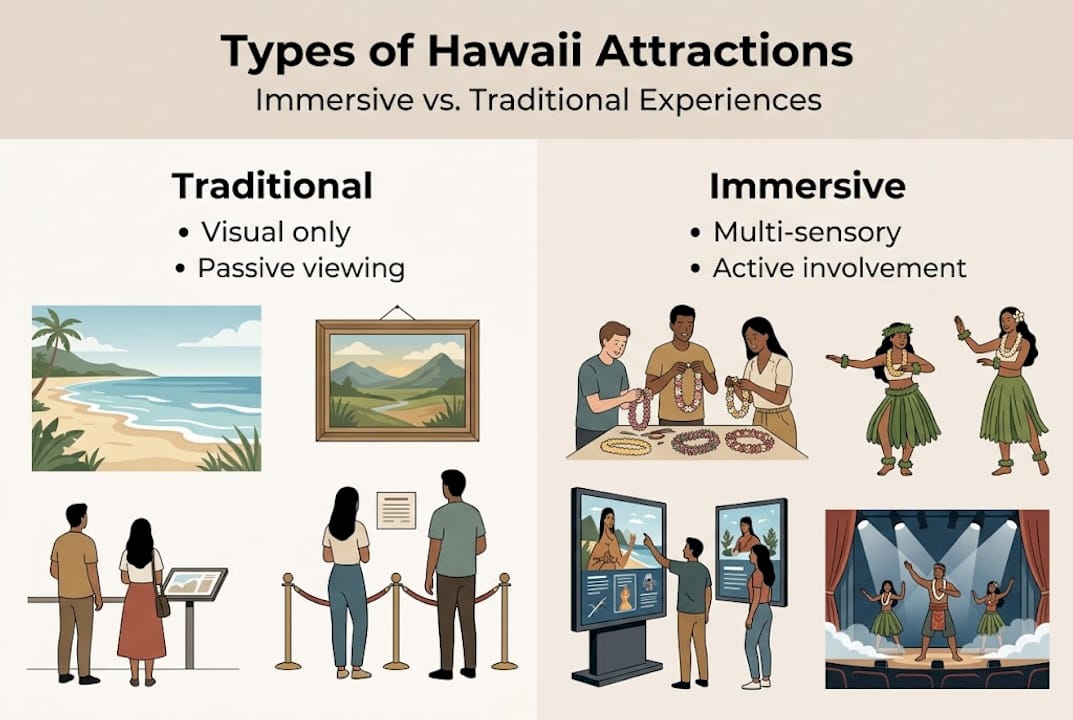
Immersive attractions use layered sensory technology to create the feeling of being transported into another world, story, or place. Think wraparound visuals, moving seats, sound design that envelops you, and even physical effects like wind and scent. The goal is to dissolve the boundary between observer and participant. You’re not watching Hawaii. You’re feeling it.
A standout example right here in Kailua-Kona is Flight of Aloha. As a modern attraction experience, it uses 8K visuals, motion seating, wind, and scent to simulate soaring over the islands while Hawaiian legends unfold around you. It’s the kind of experience people compare to what you’d get if a helicopter tour and a Disney ride had a baby, rooted in genuine aloha.
Here’s what separates truly immersive attractions from traditional options:
- Wraparound or curved screens that eliminate dead zones in your field of vision
- Motion seating that tilts, rises, and responds to on-screen action
- Wind and temperature effects that make scenes feel physically real
- Scent technology that activates memories and emotions tied to place
- Sound design using spatial audio to place sounds directionally around you
- Narrative structure that draws you emotionally into a story rather than presenting facts
Compare that to a standard museum visit or a static scenic lookout:
| Feature | Traditional tour/museum | Immersive attraction |
|---|---|---|
| Sensory engagement | Mostly visual | Sight, sound, touch, smell |
| Visitor role | Passive observer | Active participant |
| Emotional connection | Moderate | High |
| Cultural storytelling | Text-based or guided | Narrative and experiential |
| Family appeal | Variable | Consistently broad |
| Replayability | Low | High |
These cultural storytelling attractions don’t just entertain. They create the feeling that you’ve genuinely been somewhere and felt something real.
Pro Tip: When visiting an immersive attraction, arrive a few minutes early to settle in and let your senses adjust. You’ll get far more out of the experience when you’re relaxed and fully present rather than rushing to your seat.
How immersive attractions deliver deeper cultural experiences
With an understanding of immersive mechanics, let’s see how these experiences connect visitors with Hawaii’s culture on a deeper level.
Hawaii has an extraordinarily rich cultural heritage. Its legends, traditions, and language carry centuries of meaning. The challenge for any visitor is that this depth can be hard to access through a brochure or a quick stop at a historic site. Immersive attractions offer a way in that feels personal and emotionally resonant.
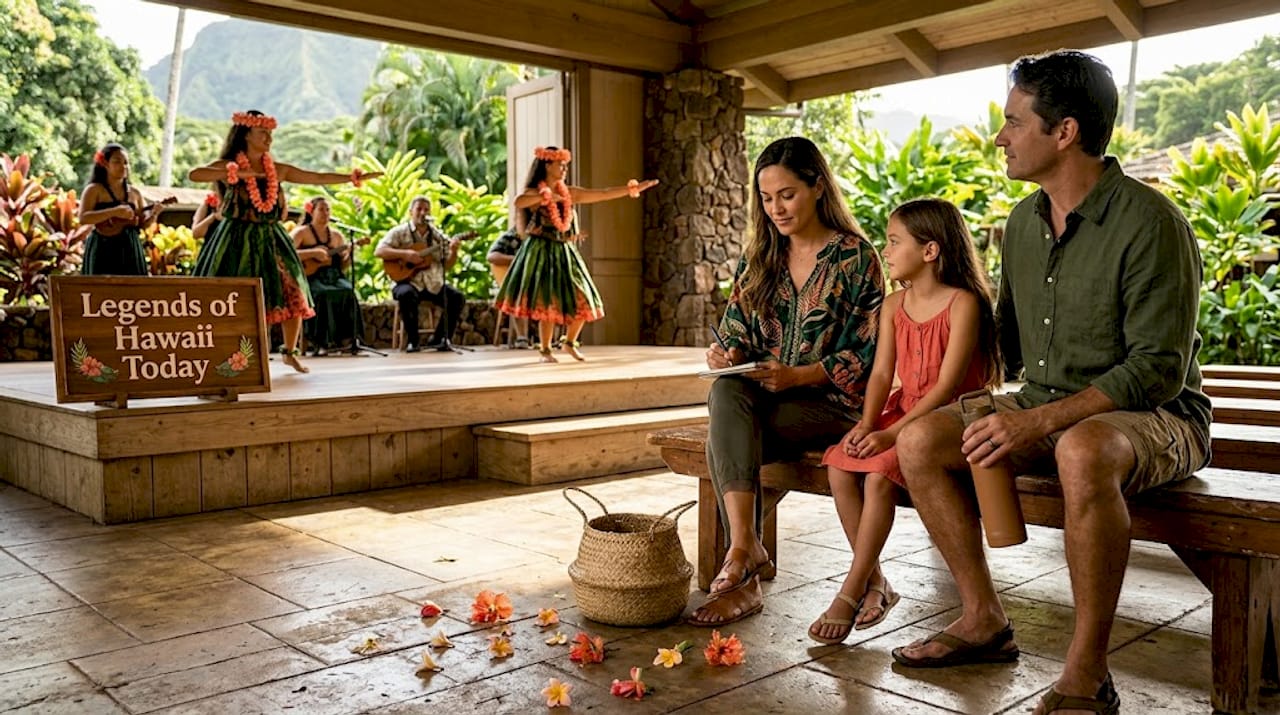
When you’re seated inside a curved theater watching the story of Naupaka unfold around you, with wind brushing your face and the scent of ocean in the air, you don’t just learn about a Hawaiian legend. You feel it. That distinction matters enormously for how much you actually retain and value afterward.
A visitor guide to cultural storytelling can help frame this beautifully. But here’s what the research adds: families in adventure tourism actively seek meaning-making and learning through shared participation. When your whole group is inside the same experience together, the conversation afterward is richer, the memories are more vivid, and the cultural learning sticks.
“Shared participation is at the heart of how families make meaning from travel. The experience becomes a story the whole group tells together long after the trip ends.”
Here’s how immersive attractions compare in terms of learning outcomes:
| Learning approach | Retention rate | Emotional engagement | Group discussion afterward |
|---|---|---|---|
| Text-based (signs, brochures) | Low | Low | Minimal |
| Guided tour | Moderate | Moderate | Some |
| Hands-on activity | High | High | Frequent |
| Immersive multisensory experience | Very high | Very high | Extensive |
There are specific, practical ways families and groups can maximize engagement during these experiences:
- Talk before you go. Share a quick version of the legend or story the attraction covers so everyone arrives with a frame of reference.
- Assign a family “reporter.” Ask one person, especially a child, to notice something specific, like a color, a sound, or a feeling, to share with the group afterward.
- Sit together when possible. Shared physical proximity during the experience reinforces the emotional bond.
- Stay curious. Notice small details in the visuals and storytelling that reveal something about Hawaiian culture, like specific plants, chants, or imagery.
- Debrief together. Spend five minutes after the experience talking about what surprised you or what you want to learn more about.
Exploring immersive Hawaii experiences as a family creates the kind of shared story that lasts far longer than a photograph. It becomes part of how you remember Hawaii together. 🌌
The emotional benefits of immersive entertainment
Beyond culture and learning, immersive attractions offer unique benefits for your state of mind.
Vacations are supposed to be restorative. But between logistics, travel fatigue, and trying to fit in every activity, it’s easy to arrive home feeling like you need another vacation. This is where immersive entertainment quietly does something remarkable. It gives your nervous system a genuine break while still filling your experience bucket.
When you’re fully absorbed in a powerful sensory environment, your brain shifts into a more present, less anxious state. There’s actual science behind this. Significant reductions in perceived stress, depression, and anxiety have been reported in groups using VR nature immersion compared to control groups. The mechanism is similar in high-quality immersive theater experiences. Sensory richness and narrative engagement shift your attention away from worry and into wonder.
The benefits of sensory attractions extend well beyond the experience itself. People report feeling calmer, more connected, and more joyful after immersive activities compared to passive entertainment like watching a film or browsing a gift shop.
Here’s a quick look at what immersive experiences can do for your emotional state:
- Reduce mental chatter by giving your mind a vivid, complete focus
- Trigger positive emotion through awe, wonder, and surprise
- Boost group connection by creating a shared emotional peak
- Restore energy by replacing overstimulation with controlled, meaningful stimulation
- Strengthen memory because emotionally rich experiences encode more deeply in the brain
- Encourage playfulness in adults who spend most of their time in “serious mode”
📊 Quick stat: Studies on sensory immersion show that participants in nature-based VR experiences report measurable improvements in mood and well-being after as little as one session. Immersive theater attractions that blend real physical effects, like wind and scent, with visual storytelling activate similar psychological pathways.
Pro Tip: If your group includes anyone who tends to feel anxious or overwhelmed in loud environments, let them know what to expect beforehand. Knowing the wind, scent, and motion effects are coming actually heightens enjoyment rather than creating surprise discomfort. Informed guests almost always enjoy immersive attractions more.
The takeaway here is simple. Immersive attractions aren’t just fun. They’re genuinely good for you. And that makes them one of the smartest choices on any Hawaii itinerary, especially when you want the whole group to leave feeling refreshed and connected.
When is immersion most meaningful? Customizing your experience
While immersion holds great promise, making the experience truly impactful requires a thoughtful approach.
Here’s something worth saying clearly: immersive attractions are not automatically better for everyone in every situation. Research on visitor interpretive resources.pdf) consistently shows that the depth of impact depends on alignment between what an attraction offers and what visitors bring with them, including their knowledge level, curiosity, and engagement style.
That’s not a criticism of immersive attractions. It’s a call to be intentional about how you approach them. The most meaningful experiences happen when there’s a real match between what you’re curious about and what the experience offers.
Here’s how to customize your approach for maximum impact:
-
Assess your group’s interests honestly. Are you drawn to Hawaiian history and legend? Visual spectacle? Emotional storytelling? Choose attractions that align with what genuinely excites your group, not just what looks impressive online.
-
Consider knowledge levels. A family that has been reading about Hawaiian mythology will experience a legend-based attraction very differently from one that arrives with no context. Neither is wrong, but knowing where your group starts helps you prepare.
-
Think about learning styles. Some people are visual learners who love sweeping landscapes. Others are drawn to story and character. Look for attractions that offer both to serve a mixed group well.
-
Review the content beforehand. Most quality immersive attractions, including Flight of Aloha, describe their films and themes on their websites. A quick read-through before your visit primes your brain beautifully for deeper engagement.
-
Plan for reflection time. Don’t rush from the attraction to your next activity. Build in 10 to 15 minutes to sit, talk, and let the experience settle. This is when meaning actually forms.
-
Let the family travel impact surprise you. Often the moments of deepest connection happen during the post-experience conversation, not inside the theater itself.
Thinking about family entertainment in Hawaii through this lens helps you move from simply booking activities to designing experiences that genuinely matter.
Pro Tip: After your immersive attraction visit, ask each person in your group to share one word that describes how they felt during the experience. It’s a simple, low-pressure way to open a conversation about Hawaiian culture, storytelling, and shared emotion that can last the whole drive home.
The best immersive experiences meet you where you are and invite you further in. Preparation isn’t mandatory, but it turns a great experience into an unforgettable one.
Our perspective: Meaning matters more than mechanics in immersive travel
Having explored the practical benefits and caveats, here’s our take on why immersive attractions truly stand out.
It’s easy to get excited about the technology. Eight-K screens, motion seats, wind effects, and scent delivery systems are genuinely impressive. But if that’s all an attraction offers, the experience fades fast. What keeps guests thinking about Flight of Aloha days after their visit isn’t the pixels. It’s the story of Naupaka, the feeling of soaring over Lahaina, the way the wind made the scene feel real.
Immersive technology in tourism is at its best when it disappears. When you forget you’re in a theater because the story has genuinely moved you. That’s the standard we believe every immersive attraction in Hawaii should reach for.
Hawaii’s culture is too rich, too layered, and too meaningful to serve as mere backdrop for a thrill ride. When attractions treat legend and language with real respect, the technology amplifies something authentic. That’s when visitors leave not just entertained, but genuinely changed. That’s the goal. That’s what makes Kona’s immersive scene worth your attention. 🌺
Experience Kailua-Kona’s immersive side today
Ready to take your Hawaiian adventure to a new level?
Flight of Aloha brings together everything this article has been describing. Eight-K visuals, motion seating, wind, scent, and stories rooted in real Hawaiian legends all come together in one thrilling, meaningful experience right in the heart of Kailua-Kona. It’s one of those rare attractions that families, solo travelers, and groups all love equally.

Whether you’re planning your first trip to the Big Island or looking to add something truly different to a return visit, this is the experience that will become the story you keep telling. Browse packages, check showtimes, and book your seats directly at flightofaloha.com. Your flight over Hawai’i is waiting. 🌌
Frequently asked questions
What is an immersive attraction?
An immersive attraction uses technology like wraparound screens, motion seating, and sensory effects such as wind and scent to fully place visitors inside a story or environment. Flight of Aloha in Kailua-Kona, for example, uses 8K visuals, motion seating, wind, and scent to simulate flying over Hawai’i.
Do immersive attractions help families bond?
Yes, sharing a powerful sensory experience creates a common emotional peak that families talk about and reflect on together long after the visit. Research on adventure-tourism families confirms that shared participation and post-trip remembering actively support bonding and well-being.
Can immersive attractions reduce stress?
Absolutely. Studies report significant reductions in perceived stress, depression, and anxiety in groups using immersive nature environments compared to control groups, and similar psychological benefits apply to high-quality multisensory attraction experiences.
Are immersive attractions suitable for all ages?
Most are designed with a wide age range in mind, making them accessible and genuinely enjoyable for everyone from young children to grandparents, which is exactly what makes them such a strong choice for multigenerational family travel.
How do I choose the right immersive attraction for my family?
Consider your group’s interests, cultural curiosity, and preferred learning styles, then look for attractions whose content genuinely aligns with what excites you. As research on visitor interpretive resources.pdf) shows, impact depends heavily on fit between the attraction’s themes and what visitors bring with them.
Recommended
- Understanding What Makes Hawaii Immersive Experiences Special | Flight Of Aloha
- Why Themed Experiences Win: Deeper Connections For Hawaii Visitors | Flight Of Aloha
- Discover Destination Entertainment: Immersive Hawaii Experiences | Flight Of Aloha
- Why Immersive Activities Beat Standard Tours In Kailua-Kona | Flight Of Aloha