
How guides make Hawaiian attractions unforgettable 🌺
TL;DR:
- Guides serve as living bridges, transforming attraction visits into meaningful cultural experiences.
- Personalized storytelling by skilled guides deeply enhances visitor satisfaction and emotional connection.
- Technology complements but cannot replace the spontaneous, culturally sensitive moments created by guides.
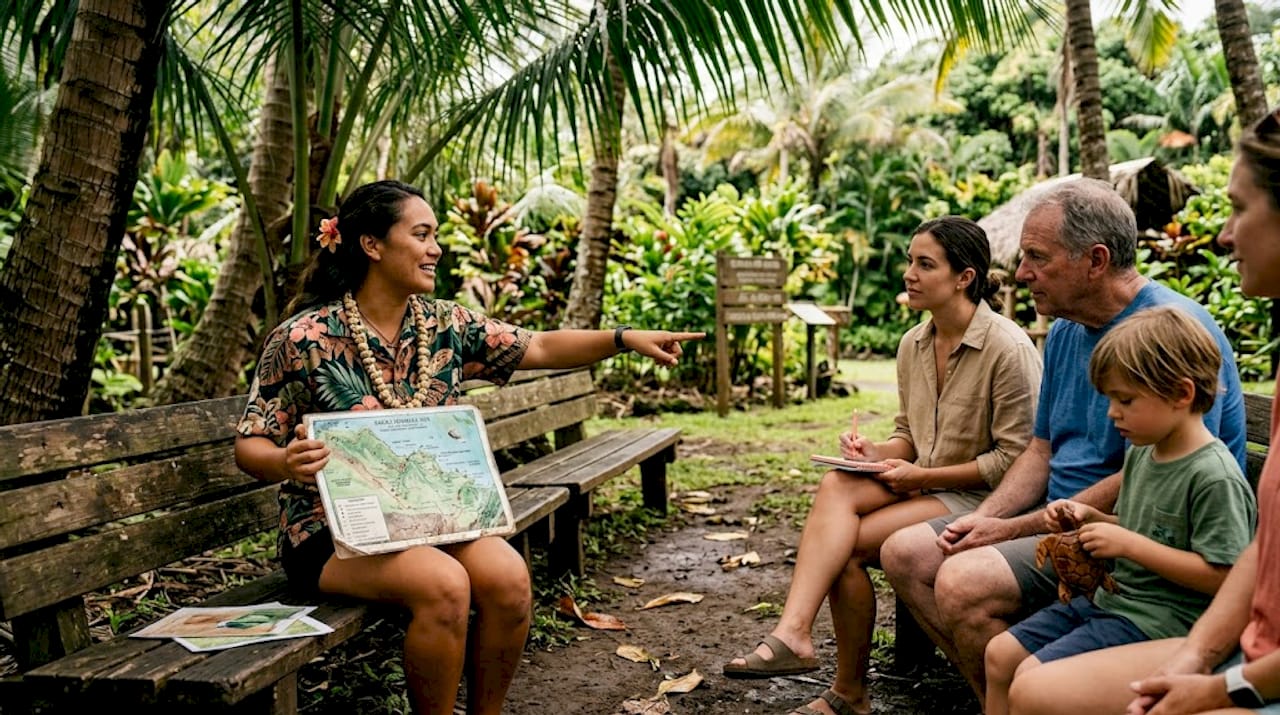
Most visitors arrive at Hawaiian attractions expecting beautiful scenery and maybe a fun ride. What they don’t expect is to leave feeling genuinely moved by a story that has been alive in these islands for centuries. That shift, from tourist to someone who truly feels Hawai’i, happens because of one underestimated force: the guide standing right in front of you. Guides are not just narrators reading from a script. They are living bridges between ancient culture and your present moment, and understanding their role completely changes how you experience every Hawaiian attraction you visit.
Table of Contents
- Guides as the living bridge: Transforming attraction experiences
- Storytelling and technology: The powerful new duo
- Mastering the human element: Personalization, group dynamics, and sensitivity
- Why guides matter: Impact on visitor satisfaction and immersion
- The truth about guides: What technology can’t replace
- Ready to experience Hawaii’s legends firsthand?
- Frequently asked questions
Key Takeaways
| Point | Details |
|---|---|
| Guides create immersion | Expert guides transform Hawaiian attractions into deeply immersive, personal experiences. |
| Human connection matters | Technology helps, but human adaptability and storytelling drive authentic visitor engagement. |
| Personalization is key | Successful tours are tailored in real time to each group’s needs, interests, and cultural sensitivities. |
| Local legends come alive | Guides bring Hawaiian folklore and heritage to life, making attractions unforgettable. |
Guides as the living bridge: Transforming attraction experiences
Think of the best storyteller you have ever encountered. Not someone reciting facts, but someone who pulls you in, adjusts the story based on who is in the room, and leaves you thinking about it for days. That is exactly what the finest Hawaiian attraction guides do, and they do it using one of the oldest tools in human history: oral tradition.
In Hawaiian culture, stories were never written down for centuries. They were carried in the voices of the kūpuna, the elders who passed wisdom from generation to generation through chant, dance, and storytelling. Today’s exceptional guides carry that same responsibility. As expert guidance research confirms, guides act as kūpuna-like living libraries and foster adaptive personalization for each group they encounter. That is not a small distinction. It means a great guide is not just informed. They are a living keeper of cultural memory.
Here is what separates a truly skilled guide from someone just going through the motions:
- Cultural interpretation over rote narration: A skilled guide reads between the lines of a legend, explaining what it meant to ancient Hawaiians and what it still means today.
- Adaptive storytelling: They notice when a family group needs a lighter, more accessible version of a story versus when a culturally curious audience wants the full depth.
- Personal connection: They weave in observations about the specific group, creating moments that feel tailor-made rather than canned.
- Emotional resonance: They know when to slow down, when to let silence do the work, and when to inject energy.
“The best guides don’t just tell you where you are. They show you who has stood here before you, and why that matters.” This kūpuna-like approach is what separates a tour from a true cultural experience.
Guide-driven cultural storytelling at its finest feels less like a lecture and more like being welcomed into a family story. When guides personalize content to match the backgrounds and curiosity levels of each group, every visitor walks away with something different and something deeply personal. Learning about Hawaiian storytelling traditions reveals just how layered and intentional this oral culture truly is.
Pro Tip: When you arrive at any Hawaiian attraction, make eye contact with your guide early and ask a genuine question. Guides read the room constantly, and one engaged visitor can inspire a deeper, richer experience for the entire group.
Storytelling and technology: The powerful new duo
Having established guides as living bridges, let’s see how their role evolves with new technologies to make cultural legends even more vivid. 🌌
Technology has arrived in Hawaiian attractions in a spectacular way. We are talking 8K visuals, motion-synchronized seats, scent systems, and wind effects that literally make you feel the ocean breeze on your face. But here is the thing: technology without storytelling is just a screen. The magic happens when a knowledgeable guide wraps that sensory experience in a narrative that gives it meaning.
Expert research shows that guides who adeptly adapt and personalize, blending modern techniques with cultural wisdom, create the most memorable visitor experiences of all. The best modern Hawaiian attractions understand this completely. They build technology as a canvas, and guides as the artists who paint the story on it.
Here is a simple breakdown of how different formats compare:
| Format | Storytelling depth | Visitor emotional connection | Personalization level |
|---|---|---|---|
| Traditional only (oral, no tech) | Very high | High | High |
| Tech-focused (visuals, no guide) | Low | Medium | Low |
| Blended (guide plus technology) | Highest | Highest | Highest |
The blended approach wins every time. Here is how a modern Hawaiian legend tour’s hybrid storytelling flow typically looks:
- Opening cultural context: The guide sets the scene verbally, sharing the legend’s origin and its significance to the Hawaiian people before any visuals begin.
- Sensory activation: The attraction’s technology launches, immersing visitors in sights, sounds, and even scents that match the story being told.
- Live narration overlay: The guide continues speaking during key moments, pointing out details in the visuals that connect to the deeper cultural meaning.
- Interactive pause: The guide pauses the experience (or narrates between sequences) to answer questions or invite visitors to reflect on what they just felt.
- Cultural closeout: After the experience, the guide brings the group back together, sharing what the legend means in modern Hawaii and how it continues to shape the community.
What visitors gain from this approach is extraordinary. You don’t just watch a story. You feel it in your body, understand it in your mind, and carry it in your heart. Cultural storytelling in attractions works because it engages every sense and every layer of human understanding at once. And understanding why attractions use local legends reveals that these stories were never meant to be passive. They were always meant to be experienced.
Mastering the human element: Personalization, group dynamics, and sensitivity
While technology creates new opportunities, the human touch remains vital, especially in how guides navigate unpredictable or diverse groups.
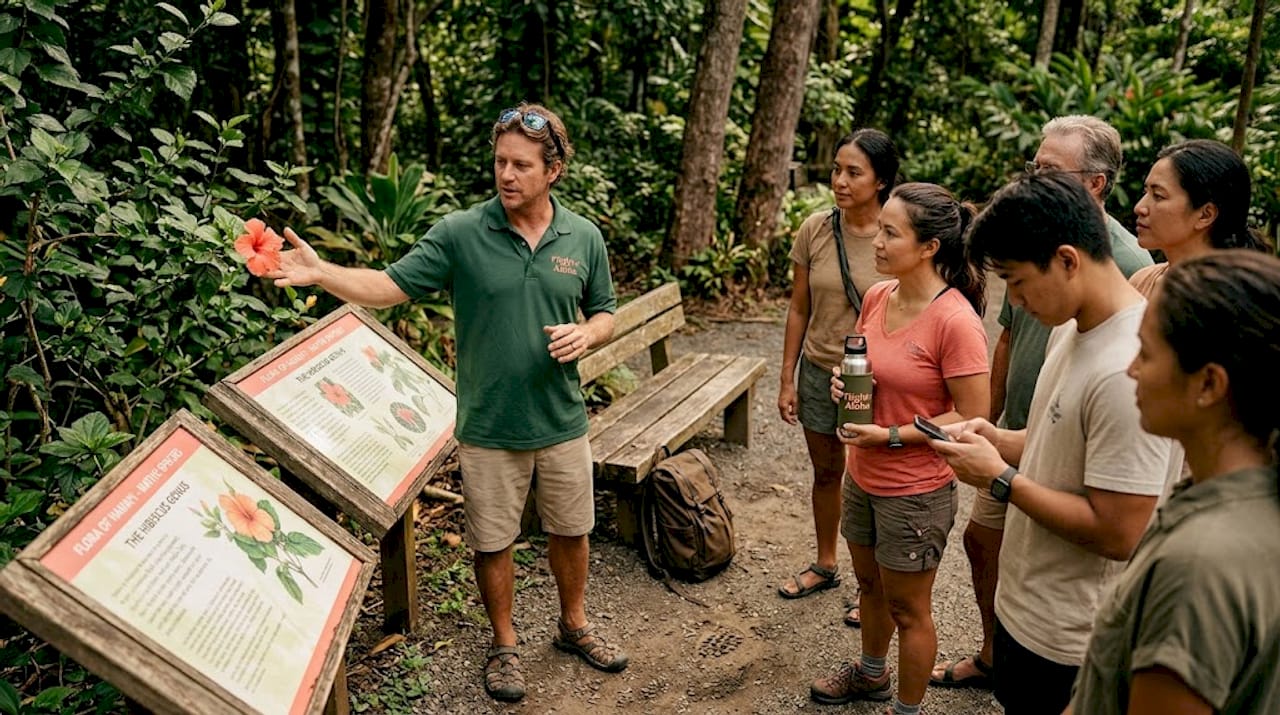
No two tour groups are the same. You might have a multigenerational family from Texas sitting next to a cultural scholar from Japan, and both of them deserve an experience that speaks to them. This is where great guides earn every bit of their reputation. Handling group dynamics and cultural sensitivity is part of a guide’s expert toolkit, and the difference between a standard response and an adaptive one is enormous.
| Situation | Standard guide response | Adaptive guide response |
|---|---|---|
| Restless children in the group | Continues scripted narration | Pivots to shorter, interactive legend snippets |
| Language barrier with visitors | Speaks louder and slower | Uses visuals, gestures, and simplified metaphors |
| Unexpected weather change | Apologizes and rushes through | Reframes the rain as part of the island’s living story |
| Visitors with deep cultural knowledge | Gives standard overview | Invites them to share and builds a collaborative experience |
Cultural sensitivity is especially important in Hawaiian attractions. Here are specific sensitivities that every visitor should understand and that skilled guides actively protect:
- Sacred place protocols: Some sites and stories carry kapu (restrictions) around what can be photographed or repeated. Guides enforce these respectfully.
- Correct pronunciation: Guides ensure Hawaiian words are spoken correctly, not approximated, which honors the language’s precision and beauty.
- Attribution of legends: Stories are credited to specific islands, regions, and communities, not lumped together as generic “Hawaiian mythology.”
- Avoiding appropriation: Great guides help visitors engage with culture as participants in understanding, not consumers taking something away for novelty.
- Recognizing grief or reverence: Places like Lahaina carry deep community pain. Guides navigate those stories with real tenderness and care.
Adaptive visitor engagement is a skill that takes years to develop. It requires reading nonverbal cues instantly and adjusting without breaking the flow of the experience.
Pro Tip: Watch your guide’s pacing. If they slow down, lean in. That is almost always the moment a deeper cultural truth is about to be shared. And if you have personal connections to Hawaiian culture or history, let your guide know before the tour starts. Guides love building on that context and will often tailor the experience in ways that feel genuinely moving.
VIP personalization in tours takes this even further, offering guests direct access to guides who can craft an experience around specific interests, whether that is a particular legend, a specific region of the islands, or a family’s own connection to Hawaiian heritage.
Why guides matter: Impact on visitor satisfaction and immersion
These foundational skills and sensitivities all converge for one reason: to transform ordinary visits into unforgettable journeys.
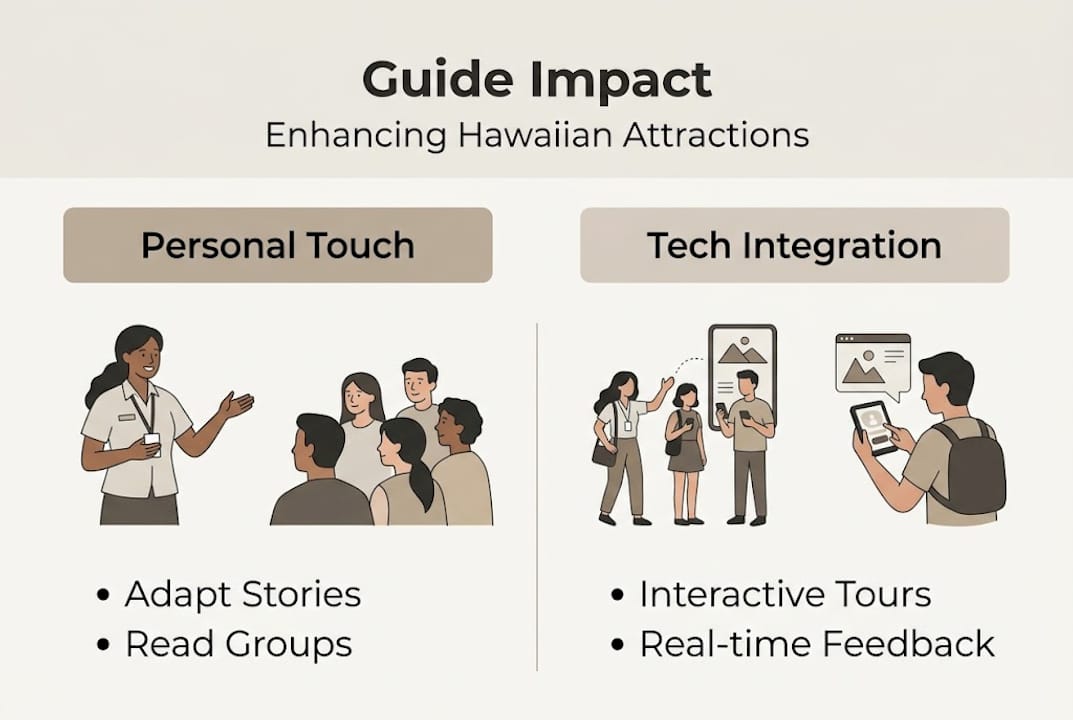
The evidence is clear. When visitors receive personalized, guide-led cultural experiences, their satisfaction levels rise dramatically. Adaptive personalization leads to more meaningful, memorable visitor experiences, and this shows up in real, measurable ways. Attractions that blend expert guides with immersive technology see higher review scores, longer dwell times, and far more repeat visitors than those relying on technology alone.
Here is exactly how guides build those unforgettable visits, step by step:
- Pre-tour assessment: Great guides observe the group before the experience even begins, noting energy levels, age ranges, and visible excitement or hesitation.
- Opening engagement: They start with a story hook, not a list of rules. Something like the legend of Naupaka immediately draws people in on an emotional level.
- Pacing adjustment: Throughout the experience, guides monitor the group’s body language and speed up, slow down, or add humor accordingly.
- Surprise moments: Skilled guides hold back a surprising cultural detail and reveal it at just the right moment, creating a genuine “wow” reaction.
- Personal connection invitations: They ask questions that invite visitors to connect the story to their own lives, making the legend feel relevant rather than historical.
- Closing reflection: A strong guide closes with something visitors can carry home, a phrase, an image, or a question that keeps the story alive beyond the attraction.
“I thought I was just going to watch a movie about Hawaii. I ended up crying because our guide made me feel like I was part of the story.” This kind of response is not rare. It is what happens when a skilled guide is at work.
Attractions offering storytelling experiences in Kailua-Kona are seeing this firsthand. Visitors who engage with guide-led legends report feeling a genuine connection to the Hawaiian people, not just the landscape. And cultural education in Hawaii attractions research shows that emotionally engaged visitors are significantly more likely to leave positive reviews, recommend the attraction to others, and return themselves.
The improvised moments matter just as much as the scripted ones. A guide who spots a rainbow during a tour and connects it to the legend of Kahalaopuna, goddess of the rainbow, in real time creates a memory that no pre-written script ever could.
The truth about guides: What technology can’t replace
After looking at every facet of what guides do, here is our honest take: technology is incredible, and we are passionate about what immersive visuals and motion effects can do for a Hawaiian story. But we have seen something time and again that no algorithm can replicate. It is the moment a guide pauses, looks at a first-time visitor who is quietly overwhelmed with emotion, and gently says, “This place does that to people. You’re feeling exactly what it wants you to feel.”
No screen generates that. No scent system or wind effect can read a person’s heart. The spontaneous, culturally sensitive, deeply human moments that skilled guides create are the ones visitors talk about for years. They share them at dinner tables and in travel reviews. They inspire their children to visit Hawaii someday.
Technology is a powerful amplifier. But the guide is the signal. Shaping memorable Hawaiian experiences always comes back to the human beings who carry the culture and choose to share it with genuine aloha. That is irreplaceable, and it always will be.
Ready to experience Hawaii’s legends firsthand?
If reading about the power of guides and cultural storytelling has sparked something in you, imagine what it feels like to actually be there. At Flight of Aloha in Kailua-Kona, we blend 8K visuals, motion effects, wind, and authentic Hawaiian legends into an experience that is like nothing else on the island. Think of it as what you’d get if a helicopter tour and a Disney ride had a baby, rooted completely in aloha.
Our immersive films like Naupaka and Lahaina bring the islands’ most powerful legends to life in ways that move people deeply. Whether you’re looking for a family adventure, a VIP cultural experience, or a truly memorable Kona activity, we would love to welcome you. Book your experience today and feel the difference that passionate storytelling makes. 🌺
Frequently asked questions
How do guides personalize experiences at Hawaiian attractions?
Guides tailor stories, pacing, and cultural details to fit the interests and backgrounds of each group, and as expert research confirms, this adaptive personalization makes every tour genuinely unique.
Why can’t technology fully replace live guides for cultural storytelling?
Technology enhances tours, but only live guides can adapt to group dynamics, spontaneous questions, and real-time cultural moments that no pre-programmed system can anticipate.
What makes Hawaiian guides unique?
Hawaiian guides act as kūpuna-like living libraries, sharing local legends with cultural precision and ensuring every experience honors the traditions it represents.
How do guides handle unexpected challenges during tours?
Experienced guides adapt quickly to changes in weather, group mood, or unexpected questions, turning unpredictable moments into memorable highlights rather than disruptions.
Recommended
- How To Combine Attractions For A Unique Hawaiian Adventure | Flight Of Aloha
- Visitor Guide Cultural Storytelling: Hawaiian Immersion Impact | Flight Of Aloha
- How To Book Guided Tours For Immersive Hawaii Experiences | Flight Of Aloha
- How Local Legends Transform Hawaii’s Tourism Experience | Flight Of Aloha