
Unlock the benefits of immersive experiences in Kailua-Kona
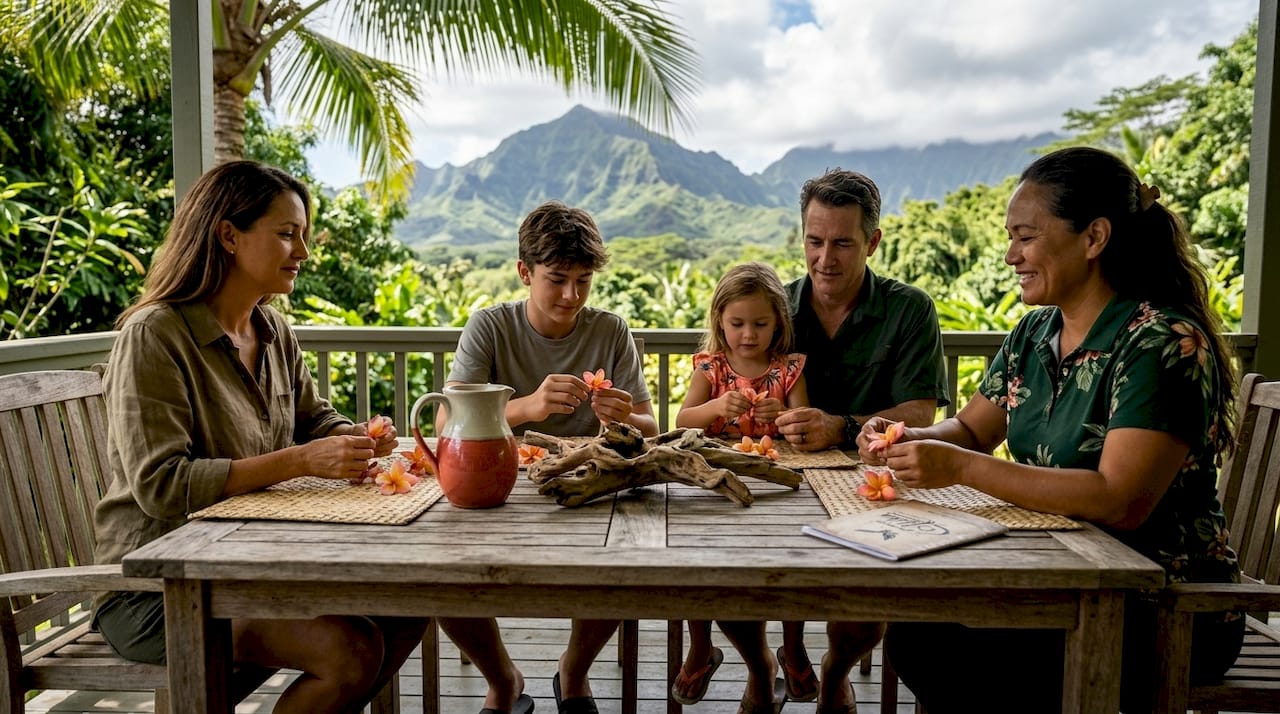
Most visitors to Kailua-Kona spend their days at the beach, browse a few shops, and call it a great trip. And honestly? That’s wonderful. But there’s an entire layer of experience that most travelers walk right past, one that delivers real emotional impact, stronger family memories, and a genuine connection to Hawaiian culture. Immersive experiences are not just a trend or a tech novelty. They are a fundamentally different way of engaging with a place, and the science behind them is genuinely surprising. Whether you’re planning your first trip to Kona or your tenth, understanding what immersive experiences actually offer will completely change how you plan your time here. 🌺
Key Takeaways
| Point | Details |
|---|---|
| Deeper engagement | Immersive experiences foster a sense of presence and connection unique from ordinary attractions. |
| Lasting benefits | Psychological and emotional gains from immersion often outlive the experience itself, creating powerful memories. |
| Fit matters | Matching the immersive activity to your group’s interests and needs is crucial for a positive outcome. |
| Cultural connection | Meaningful, hands-on participation deepens your understanding of Kailua-Kona’s spirit and traditions. |
| Everyone included | The best immersive programs in Hawaii work for all ages and accessibility levels, ensuring memorable moments for the whole family. |
What makes an experience immersive?
Let’s be clear about something first. “Immersive” is one of those words that gets thrown around a lot without much meaning behind it. Not every flashy attraction or themed dinner qualifies. True immersion is something specific, and it’s worth understanding before you book anything.
At its core, an immersive experience is one that fully captures your senses and emotions, pulling you out of passive observation and into active participation. Research on richer Hawaiian experiences consistently shows that this kind of deep engagement produces measurable psychological and emotional effects that standard tourist activities simply cannot replicate.
Psychologists describe immersion through three mechanisms. First, there is place illusion: the sense that you are genuinely somewhere else, even if your rational mind knows you are not. Second, there is plausibility illusion: your brain accepts the scenario as real enough to respond emotionally. Third, there is virtual body ownership, or VBO: the feeling that your own physical self is part of the experience. According to research published in Nature, immersive experiences can increase well-being via these three presence mechanisms, and the effects are measurable even in short sessions.
Here’s a quick comparison to make this concrete:
| Traditional activity | Immersive alternative |
|---|---|
| Watching a standard luau performance | Participating in chant, movement, or storytelling alongside performers |
| Reading about Hawaiian history at a museum | Living a legend through motion, scent, and multi-sensory narrative |
| Helicopter tour viewed through a window | A flying theater using 8K visuals, wind, and scent to simulate soaring over Hawai’i |
| A snorkel with audio instructions | A guided ocean experience with cultural storytelling about reef traditions |
The difference is participation, presence, and emotional resonance. Immersive technology transforms travel by shifting visitors from spectators to participants.
The key elements that make immersive experiences work for families include:
- Multi-sensory engagement: sights, sounds, physical sensation, and sometimes scent
- Cultural context: grounded in real stories, not invented themes
- Emotional stakes: you care about what happens next
- Physical or narrative participation: you are part of the story, not watching it unfold from a distance
“The psychological effect of ‘presence’ is not just about believing you’re somewhere else. It’s about your emotional system responding as if the experience is real. That response is what creates lasting memory and genuine empathy.” Research into boosting emotional connections with immersive tech confirms this link repeatedly across different formats.
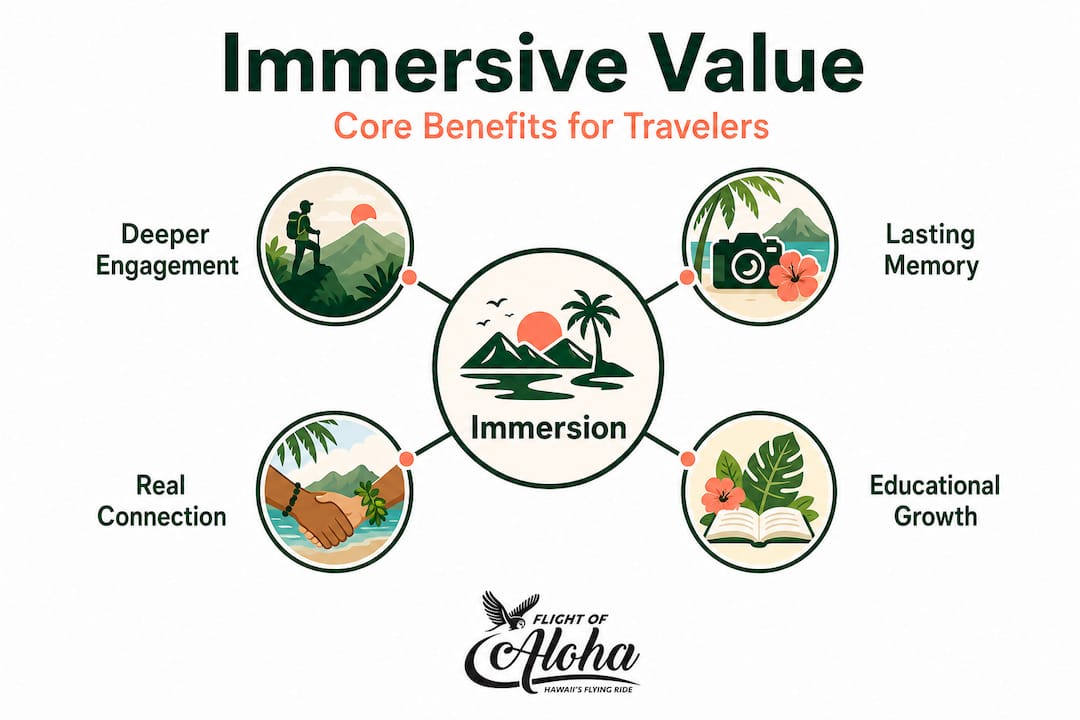
Core benefits of immersive experiences for families and tourists
Now that immersion is demystified, let’s break down the key benefits families and travelers actually experience. These aren’t abstract ideas. They show up in behavior, memory, and family conversations for weeks after the trip.
Emotional engagement and memory
People remember experiences that made them feel something. Standard tours and attractions can be wonderful, but they often fade into a blur. Immersive experiences are different because they trigger emotional responses that the brain encodes more strongly. Studies on family travel impact show that emotionally engaging activities are consistently rated as the most memorable part of a vacation, even years later.
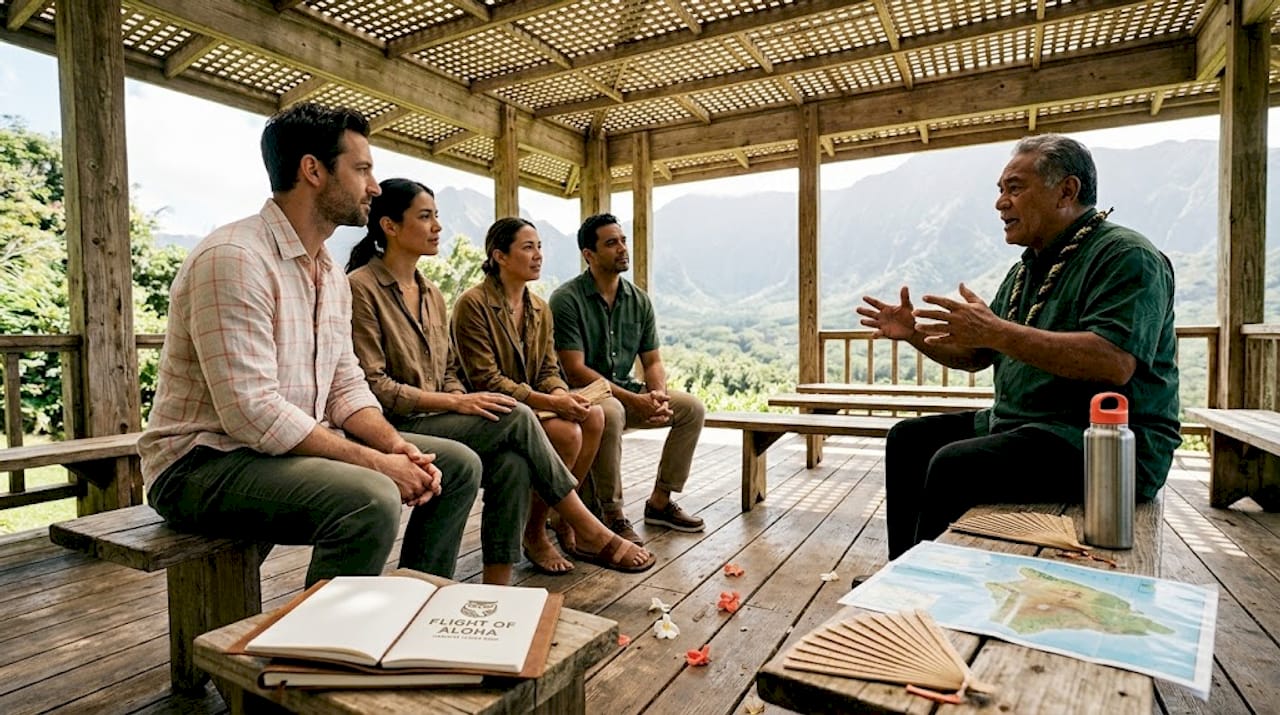
This isn’t just anecdotal. The emotional charge of an immersive moment, whether it’s soaring over a volcanic crater or hearing a Hawaiian legend told in the voice of an elder, creates what psychologists call episodic memory, the kind that sticks.
Empathy and social connection
One of the most powerful and least expected benefits is what immersive experiences do for empathy. VR and lasting prosocial attitudes research found that participants who experienced a VR homelessness scenario showed more positive, longer-lasting prosocial attitudes and higher petition support than those who only read about the issue. The immersive perspective literally changes how people relate to others.
Apply that to Hawaiian cultural storytelling. When a child experiences the legend of Naupaka not just as a story but as a felt, sensory journey, they walk away with a different kind of respect for Hawaiian traditions. That’s empathy built through experience, not lecture.
Educational depth and motivation
Immersive design also dramatically affects how well people learn. Motivation and engagement in VR learning research confirms that immersive experiences can improve motivation and emotional engagement in educational contexts, though benefits depend on thoughtful design and quality execution. For families traveling with kids, this means a well-designed immersive cultural attraction can accomplish more in 30 minutes than a two-hour museum visit.
Here is a data summary of key benefits by category:
| Benefit category | Specific outcomes | Evidence base |
|---|---|---|
| Psychological | Increased well-being, reduced stress | Presence research (Nature, 2025) |
| Emotional | Stronger memory encoding, emotional resonance | Episodic memory science |
| Social | Greater empathy, cross-generational bonding | VR prosocial attitude studies |
| Educational | Deeper motivation, better cultural retention | VR learning research |
Key outcomes for families include:
- Lasting shared memories that become family stories told for years
- Cross-generational connection as grandparents and grandchildren share the same awe
- Cultural respect and curiosity sparked by genuine storytelling
- Collaboration and communication that happens naturally when you experience something together
Pro Tip: Seek out programs with age-appropriate cultural storytelling built into the experience. Activities that feel relevant to both a 7-year-old and a 70-year-old are the ones that become true family highlights.
🌌 The family-friendly attraction benefits in Kailua-Kona run deep when you choose experiences that are genuinely designed for all ages, not just marketed that way.
Design matters: When immersion delivers (or backfires)
Knowing the upsides, it’s just as important to understand when and how immersive experiences miss the mark and how to make the right choices for your family or group.
Not every immersive concept delivers on its promise. The quality of design makes an enormous difference, and choosing the wrong activity for your group can actually undermine the experience entirely.
“The benefit of being there in immersive environments depends heavily on the activity. Being-there effects are not universal and are mediated by what users actually do during the experience.” Activity dependence of immersive benefits is a critical concept that most attraction guides never mention.
Here are the most common pitfalls to watch for when planning immersive Hawaii experiences:
- Activity mismatch: Booking a high-adrenaline experience for a family that really wanted cultural depth, or vice versa.
- Technology failure: Poor equipment or technical glitches that break the sense of presence completely.
- Motion sickness risk: Especially relevant for flying theater attractions, boat simulations, or intense VR. Always check what physical sensations to expect.
- Overwhelming younger children: High-intensity sensory environments can distress kids under a certain age if not designed carefully.
- Cultural inauthenticity: “Immersive” experiences that are actually just themed entertainment without real cultural grounding. These feel hollow and can be disrespectful to Hawaiian traditions.
Hospitality case studies from similar visitor experience programs confirm that the most successful immersive designs always start with clarity about audience and purpose. What does your family actually want? Learning? Adventure? Emotional connection? A mix?
Understanding technology and cultural connection in Hawai’i also helps families evaluate whether an attraction is truly grounded in authentic storytelling or simply using Hawaii as a backdrop for generic thrills.
Pro Tip: Always ask the attraction directly about accessibility and motion comfort before you book, regardless of how your group is described on their website. A quick email or phone call can save everyone from a disappointing afternoon.
Making immersive experiences practical in Kailua-Kona
To help families apply this knowledge, here are practical tips and local strategies for maximizing immersive value during your Kailua-Kona visit. 🌺
Kona offers a genuinely diverse range of immersive activity types. Knowing what’s available helps you plan smarter and choose experiences that actually match your family’s energy and interests.
Types of immersive activities available in and around Kailua-Kona:
- Flying theater attractions: Multi-sensory simulations with 8K visuals, wind, scent, and motion
- Guided cultural storytelling: Elder-led or expert-guided narratives tied to real Hawaiian legends and history
- Hands-on Hawaiian crafts: Lei making, traditional weaving, and kapa cloth instruction
- Interactive music and hula: Not just watching, but moving alongside performers and learning meaning behind each gesture
- Ocean and nature experiences: Guided snorkel or coastal walks with cultural ecological context
According to scalable cultural education research in Hawaiian hospitality settings, guided storytelling experiences are effective for all ages and can work beautifully even with large visitor groups. That’s a meaningful finding because it confirms that well-designed programs don’t require a small, exclusive group to deliver real impact.
A helpful visitor guide to Hawaiian immersion can point families toward programs that are rooted in real traditions, not tourist-friendly approximations.
What to look for when evaluating an immersive activity:
- Multi-sensory design (not just visual)
- Grounded in genuine Hawaiian culture with community involvement
- Accessible and inclusive for different ages and physical abilities
- Staff who can answer questions and adapt the experience for your group
Questions to ask organizers before booking:
- Is this experience designed for children and older adults equally?
- What physical sensations should we expect? Is motion involved?
- How is Hawaiian culture represented? Are community members involved?
- What happens if someone in our group needs to step out?
- Are there repeat-friendly elements for kids who want to go again?
Cultural education at Hawaiian attractions is most powerful when it’s embedded into the design of the activity, not offered as an optional add-on. And the best cultural storytelling in Hawaiian attractions connects people to real legends, real places, and real community meaning.
Pro Tip: Prioritize experiences with flexible formats. Drop-in segments, repeatable experiences, and onsite staff who can answer questions make a huge difference, especially with mixed-age groups or children who process new environments at their own pace.
The real value of immersion: What most visitors miss
Here’s an opinion we hold strongly at Flight of Aloha, one that conventional travel guides rarely say out loud.
Most travelers assume “immersive” means more screens, bigger speakers, or more dramatic lighting. It doesn’t. The real power of immersion has nothing to do with technology. It has everything to do with meaning.
We see visitors walk out of experiences like our Naupaka film with tears in their eyes. Not because the visuals were impressive (though they are extraordinary). Because the story touched something true about love, sacrifice, and the islands themselves. That emotional truth is what immersive design at its best actually delivers. A helicopter tour gives you the view. A flying theater rooted in Hawaiian legend gives you the feeling of belonging to something larger.
Typical Hawaiian shows can be visually stunning and genuinely entertaining. But they often leave families as observers, watching culture rather than feeling part of it. The gap between watching and participating is where real memory lives.
“The most powerful travel experiences aren’t the ones with the most spectacle. They’re the ones where every member of the family turns to each other and says ‘Did you feel that?’ Those are the moments that define a trip.”
We encourage every family and traveler to ask themselves one question before booking anything: Will this experience create a shared story we tell for years? If the answer is yes, you’ve found the true value of immersive attractions.
Look for experiences that respect Hawaiian culture, involve more than just watching, and give everyone in your group a reason to lean in. That’s where the magic lives.
Ready to make your trip unforgettable?
If you’re visiting Kailua-Kona and want to experience something that genuinely combines cultural depth with breathtaking sensation, Flight of Aloha is designed exactly for that. Think of it as what would happen if a helicopter tour and a Disney ride had a baby, rooted entirely in aloha and Hawaiian legend. 🌺

Our flying theater uses 8K visuals, motion effects, real island scents, and wind to carry you over Hawai’i in a way no other attraction in Kona offers. Films like Naupaka and Lahaina are rooted in real cultural storytelling, not invented fantasy. Every detail is designed to be accessible, memorable, and meaningful for families, couples, and groups of all ages. Whether you’re visiting for the first time or returning for another adventure, explore immersive experiences in Kailua-Kona and find the experience that’s right for your group. We’d love to share Hawai’i with you from a whole new perspective.
Frequently asked questions
What is a culturally immersive experience in Hawaii?
A culturally immersive experience in Hawaii lets you participate in hands-on, story-driven activities that connect you to local traditions and community. Cultural education programs built around guided storytelling are effective for all ages and can reach large visitor groups without losing impact.
Are immersive experiences suitable for children and seniors?
Yes, well-designed immersive programs are age-inclusive and adaptable for families with children, teens, and elders. Research on Hawaiian hospitality programs confirms that programs designed for keiki to kupuna successfully engaged more than 3,000 participants across age groups.
Do immersive experiences always produce better outcomes than traditional tours?
Immersive experiences offer more emotional and social benefits when matched to your goals, but design quality and activity fit are key to success. Activity dependence research confirms that immersion isn’t automatically better and depends on what participants actually do.
What risks or drawbacks should I consider?
Immersion can cause discomfort like motion sickness or sensory overwhelm if not planned carefully, especially with technology-heavy experiences. Research on VR learning confirms that technical issues and motion discomfort can limit effectiveness, so always ask about physical sensations before booking.
How can I tell if an experience in Kailua-Kona is truly immersive?
Look for activities that involve participation, storytelling, and sensory engagement, not just watching a show or exhibit. Authentic immersive experiences put you inside the story rather than in front of it.
Recommended
- Why Immersive Attractions In Hawaii Create Richer Experiences 🌺 | Flight Of Aloha
- 7 Unique Kona Group Experiences For Unforgettable Memories | Flight Of Aloha
- Why Immersive Activities Beat Standard Tours In Kailua-Kona | Flight Of Aloha
- Discover Immersive Sensory Attractions In Kailua-Kona | Flight Of Aloha